Trunk Leaks and Defroster Failures on Seventh-Gen Civics
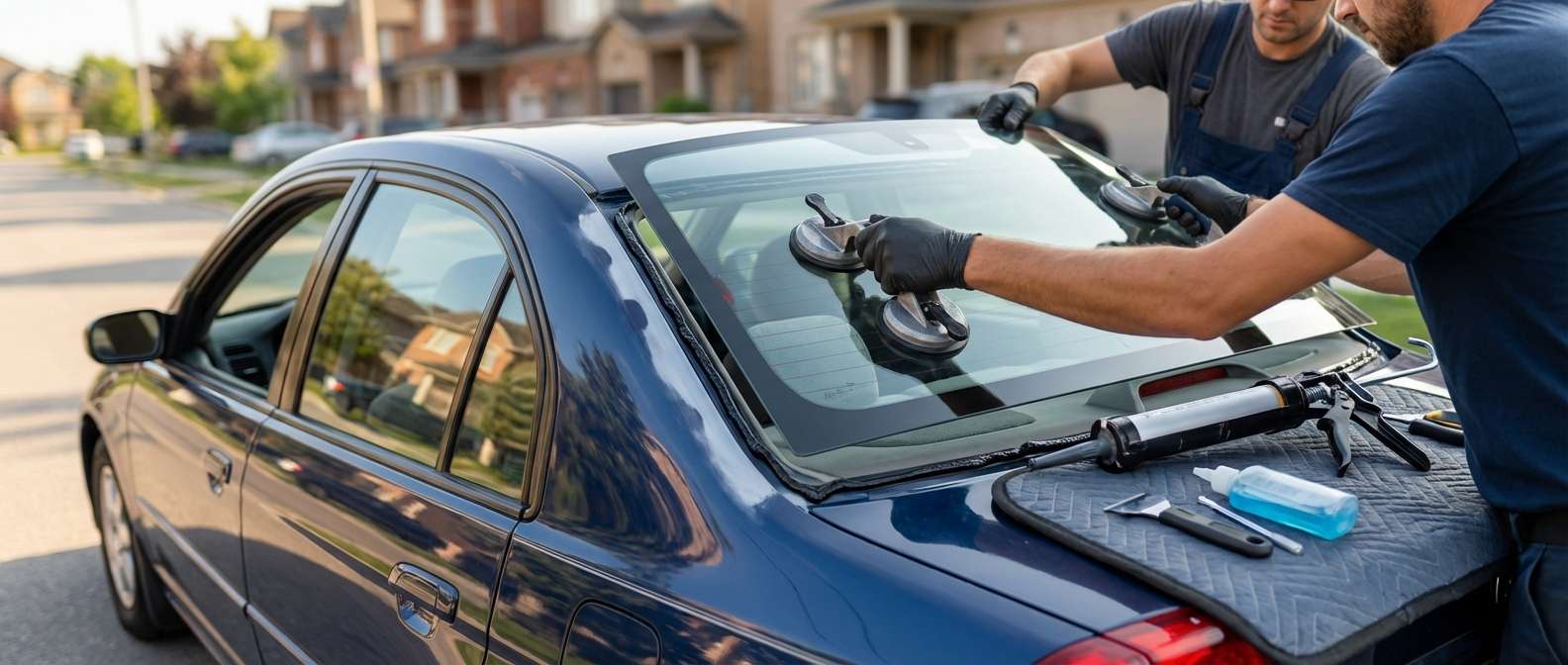
Water pooling in the spare tire well or damp rear footwells on these cars is frequently misdiagnosed as bad taillight gaskets, but the original polyurethane bead around the back glass often hardens, shrinks, and breaks seal after two decades of exposure. Once moisture slips past the degraded seal along the roofline pinchweld, it follows the C-pillar sheet metal directly down into the trunk. Another recurring issue owners run into is a non-functioning rear defroster grid. On DX, LX, and EX trims, years of baking in the sun or previous attempts to scrape off old purple window film often strip the delicate horizontal conductive lines right off the glass, requiring an entirely new rear window to restore winter visibility.
The defroster solder tabs bonded to the glass edges also tend to fatigue and snap off when cargo rubs against the C-pillar interior trim. When I replace these back glasses at your home or workplace across Toronto and the GTA, I make sure the electrical spade terminals are properly seated so the heating element draws correct current without burning out the factory under-dash defroster relay.
Three Distinct Body Styles and Glass Variations
You cannot swap the back window between different body styles of this Civic era. The four-door sedan, two-door coupe, and three-door hatchback each feature entirely different body apertures, glass curvatures, and exterior moulding arrangements. Sedans utilize dedicated perimeter reveal trims, including an upper moulding (73251-S5A-003) and lower moulding (73253-S5A-003), whereas the coupe has a steeper rake angle that uses its own glass profile (OEM 73211-S5P-A01).
The EP3 hatchback (Civic Si) is completely unique from the trunk-equipped models. Instead of bonding to a stationary body pinchweld, its rear glass is bonded directly into the upward-swinging liftgate frame and comes factory pre-drilled to pass through the rear wiper arm pivot shaft and motor hardware.
| Body Style | Rear Glass Characteristics | Industry / OEM Reference |
|---|---|---|
| 4-Door Sedan (DX, LX, EX, GX, Hybrid) | Stationary pinchweld bond; parcel shelf CHMSL notch; multi-piece reveal mouldings | OEM 73211-S5A-A01 |
| 2-Door Coupe (DX, HX, LX, EX) | Steep fastback angle; stationary bond; accommodates high-mount brake lamp or spoiler | OEM 73211-S5P-A01 |
| 3-Door Hatchback (Si / EP3) | Liftgate glass; factory holes for rear wiper motor shaft; NAGS FB21724 | OEM 73211-S5T-A00 |
Interior Trim and Third Brake Light Clearance
Replacing the rear window requires careful navigation around the interior rear parcel shelf. On the four-door sedan and base-trim coupes, the Center High-Mount Stop Lamp (CHMSL) sits flat against the lower interior surface of the glass. If the housing is brittle from long-term UV radiation, the plastic clips securing the brake light cover can snap if forced. On EX coupe models equipped with the factory trunk spoiler and the EP3 Si hatchback, that third brake light is relocated away from the bottom edge of the glass aperture into the spoiler wing itself, changing how the lower interior glass edge meets the interior trim.
All versions use single-layer curved tempered glass bordered by a baked-on black ceramic frit band. This frit protects the structural adhesive from ultraviolet sun damage, ensuring that the new glass maintains an airtight and watertight bond against the cabin metal for the rest of the car's running life.