Inspecting Replacement Rear Door Vent Glass on the Sixth-Gen Accord Sedan
Because the coupe versions of the DX, LX, and EX trims utilize a glued-in body quarter window, this specific stationary vent glass only exists inside the rear door frames of the four-door sedan models. When unboxing a replacement panel, the first thing I verify is the solar tint matching. Factory glass supplied by APTECH or Asahi came with a distinct green-tinted solar absorption profile, which quality aftermarket panels replicate to keep the back seat cabin uniform with the main roll-down windows.
I also inspect the perimeter edges for exact sizing against the factory channel boundaries. The OEM dealer part numbers reflect two distinct sides: 73405-S84-A00 (superseding 73405-S4K-J00) for the right rear door, and 73455-S84-A00 (often designated 73455-S84-A11 or 73450-S4K-J00) for the left. Because this unit has no heating wires, integrated antennas, or electronics running through the laminate, physical geometry and corner curvature are the primary factors to check. Any slight thickness variation along the border will pinch the rubber seal or leave a channel gap.
| Door Position | OEM Reference Number | Associated Rubber Channel | Glazing Method |
|---|---|---|---|
| Right Rear (Passenger) | 73405-S84-A00 | 73441-S84-A02 | Dry-Glazed / Mechanical |
| Left Rear (Driver) | 73455-S84-A00 | 73491-S84-A01 | Dry-Glazed / Mechanical |
Mechanical Seating and Hardware Alignment in the Rear Door Frame
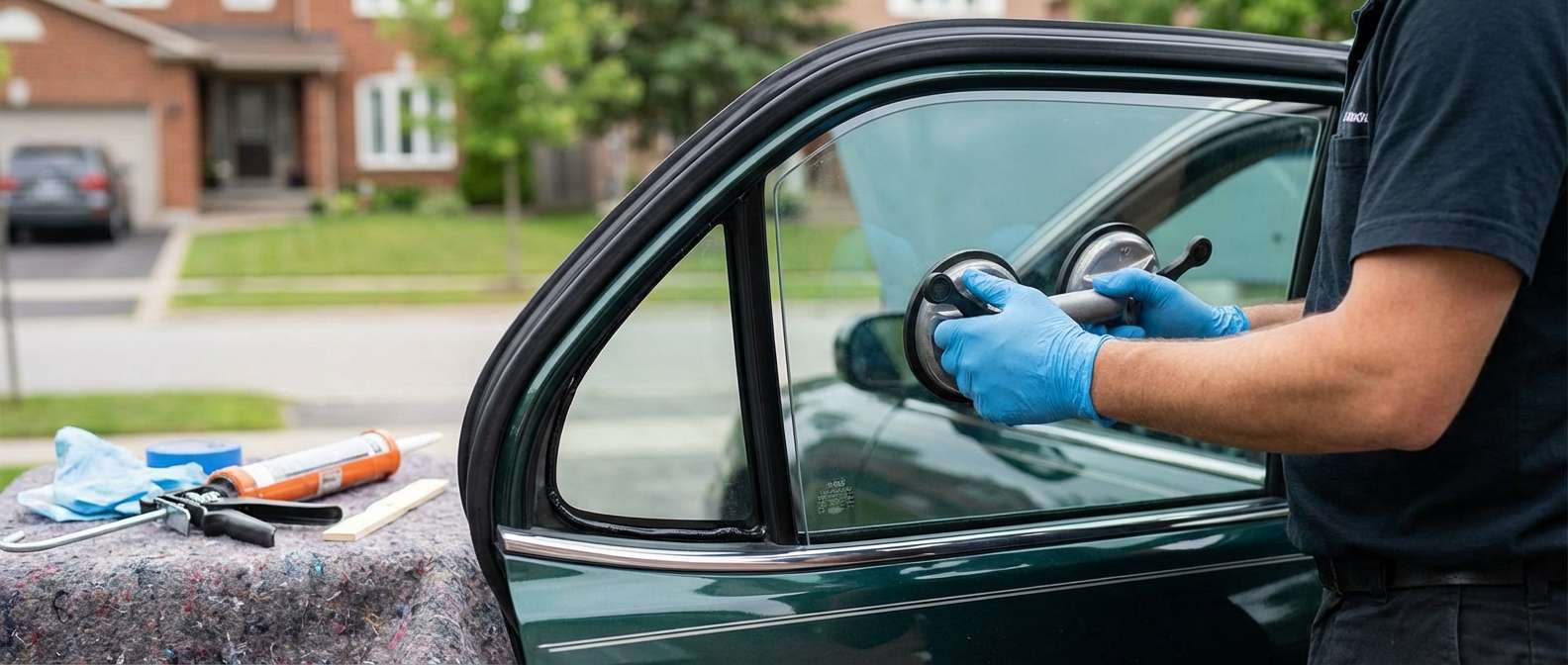
This car does not rely on urethane adhesives to hold the rear door quarter glass in place; it is a dry-glazed assembly sandwiched firmly between the rear door frame and a vertical metal division bar sash. I inspect the original channel rubber (OEM 73441-S84-A02 for the right, 73491-S84-A01 for the left) for hardening or shrinkage before fitting the glass. If the rubber has turned brittle over decades of sun exposure, it will fail to grip the edge, causing annoying cabin drafts on the highway.
Proper fitment relies entirely on the structural tension created by the division bar, which is secured by an upper retaining screw at the door sash and a hidden 10mm bolt accessible only once the lower door card is unclipt and set aside. When I complete this job on your Accord, my workmanship is backed for a lifetime, alongside a full year of coverage on the replacement glass itself. Before locking down that lower 10mm fastener, I ensure the glass is fully bedded into the deepest contour of the corner run channel to eliminate any binding when the adjacent roll-down door glass moves past it.
Post-Installation Checks for Sash Fit and Glass Travel
Once the glass is settled into the frame, the vertical division bar must be checked for true vertical plumb. Because that single strip of metal separates the stationary vent from the moving side window, even a fraction of a millimeter tilt inward will bind the primary window regulator. I test the roll-down operation repeatedly across the full travel stroke to confirm the edge slides freely through its felt track without slowing down or cocking sideways.
- Outer Mold Line Flushness: Check that the outer edge of the glass sits perfectly flat against the exterior door sash with no protruding lip.
- Division Bar Gap: Verify an even gap width from the top of the door frame down to the beltline molding.
- Air and Water Seal: Confirm the interior and exterior lips of the rubber run channel overlap the glass perimeter fully, preventing wind buffeting at cruising speeds.