Identifying Your Sierra HD Rear Window Configuration
To determine which replacement back glass your truck requires, you first need to check whether your rear window is a solid piece of glass or a three-panel power sliding unit. GMC builds these heavy-duty cabs with two distinct back glass formats. Base fleet and Pro trims typically feature a stationary, single-pane glass. Higher trims like the SLE, SLT, AT4, and Denali often come equipped with the power sliding back window assembly, designated by factory build code RPO A48. If you have an overhead console switch that opens a center section of glass toward the passenger side, you have the A48 power slider.
For trucks with a stationary back window, you must verify the tint shade and whether you have heating elements. Base Pro work trucks frequently use clear solar-green glass with no defroster wires, corresponding to factory part number 85541360. Other stationary models carry deep-tint privacy glass, available with or without the horizontal orange grid lines of an electric defroster. When you look at the lower corners of the glass from inside the cab, stationary heated versions have visible spade terminals connected to the grid wires.
If your truck features the power slider, it is always built with factory deep-tint glass and an integrated rear defroster across the panels. Unlike previous truck generations that used exposed metal division bars on the outside, this cab features an encapsulated flush-mount exterior where the sliding center pane sits smoothly recessed within the outer glass boundary. On these models, electrical current for the defroster transfers to the center glass pane using mechanical slide contacts that only mate when the sliding window is completely closed.
The Cab Spoiler, Motor Regulators, and Water Intrusion
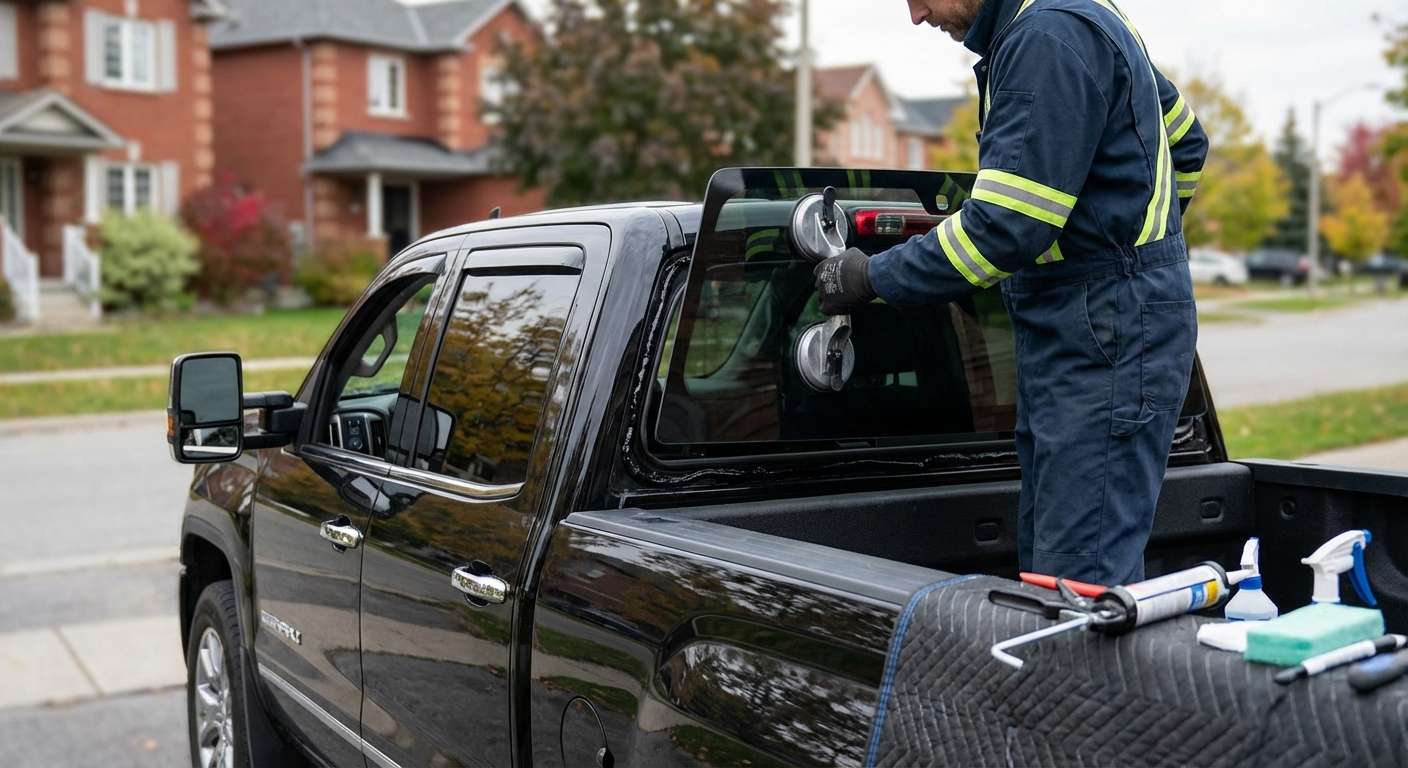
Mounted directly above the rear window on the cab roof is an exterior composite spoiler applique that houses the Center High-Mounted Stop Lamp along with the optional rear-view mirror camera and cargo bed camera. Because this aerodynamic roof trim sits tight against the top edge of the glass frame, accessing and replacing the back glass requires dropping the rear section of the interior headliner, unclipping the upper C-pillar trim panels, and unbolting the spoiler from inside the cab structure. When I replace these units, I install aftermarket back glass sourced from manufacturers such as Pilkington, PGW, FYG, or XYG rather than factory dealership parts.
On power sliding models, the drive motor and mechanical cable track assembly sit bolted low against the rear cab wall, hidden behind the carpeted interior bulkhead liner underneath the rear seat backs. This power assembly has been the subject of extensive technical updates, specifically GM Technical Service Bulletin 18-NA-383. The bulletin targets water leaks originating from stress fractures in the upper plastic guide rail that sits concealed beneath the roof spoiler. Over time, cab flex and thermal changes crack the upper slider track, allowing rainwater to bypass the perimeter bond and run down the interior C-pillars.
When this upper channel cracks, water commonly pools under the rear floor insulation or drips directly onto cab-mounted electronics, including body control modules, fuse blocks, and factory audio amplifiers mounted against the back wall. Replacing the entire rear window module eliminates the compromised plastic track that dealership seam-sealer repairs fail to fix long-term. Replacing the assembly also resolves defroster contact issues, preventing the localized terminal overheating and circuit melting that has affected these heavy-duty sliding units in severe cold-weather climates.