Identifying Rainsense Variations and Part Differences
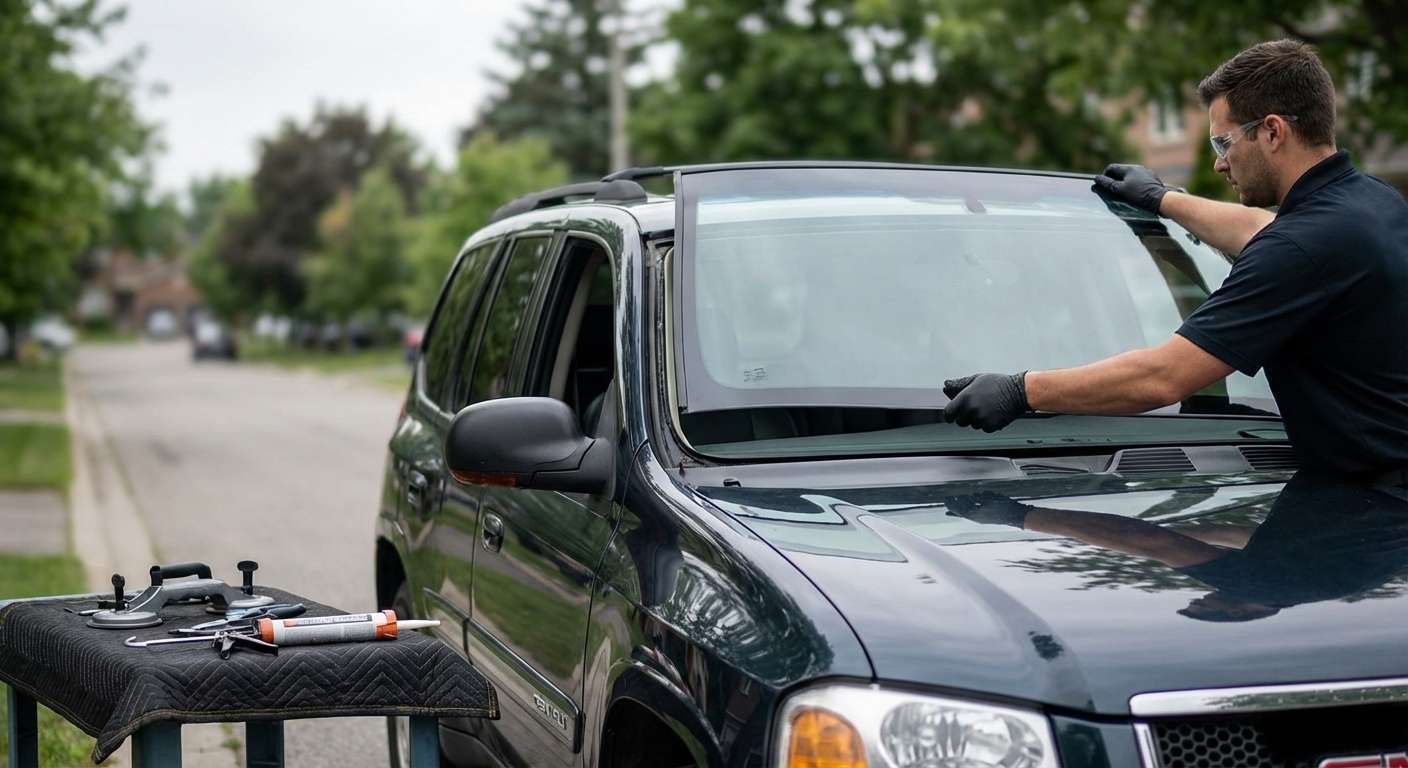
When selecting a replacement windshield for the GMC Envoy, the primary distinction comes down to whether your truck utilizes GM’s electro-optical Rainsense system. Base SLE and standard SLT models feature regular intermittent wipers paired with windshield glass that carries standard wedge-mount mirror buttons. In contrast, higher-tier models such as the Envoy Denali and optioned SLT editions feature an automatic moisture sensor bonded to the glass beneath the rearview mirror base. I bring my mobile setup directly to your driveway or workplace parking spot anywhere across Toronto and the GTA to replace either setup on-site.
The core laminated glass composition features Soft-Ray green tint throughout, with an available blue/green shade band running along the top perimeter. Radio reception relies on a fixed front fender antenna rather than glass-embedded wires, and roof-mounted pods handle XM or OnStar, meaning no antenna leads enter the glass perimeter. Despite variations in body design across standard wheelbases, the extended Envoy XL, and the open-back Envoy XUV, the front glass dimensions and curvature remain identical across the entire GMT360 production run.
| Glass Feature | Standard Intermittent (DW1584) | Rainsense Automatic (DW1585) |
|---|---|---|
| Factory Trims | SLE, Base SLT | Denali, Select SLT |
| Sensor Bracket | None (Bare Glass) | Factory-bonded rain sensor bracket |
| Mirror Mounting | Standard wedge button | Wedge button with optical gel coupling |
| Equivalent GM Part | 25974701 | 22973638 |
Managing Exterior Moldings and Pillar Hardware
The perimeter around this windshield uses a top reveal rubber gasket combined with rigid exterior A-pillar side reveal moldings (such as GM part 15100760 on the passenger side). These plastic side pillars lock into place over metal body studs using fragile plastic retaining clips. Over years of thermal expansion and UV exposure, these factory clips become brittle. If the clips crack or lose tension during service, the pillar trim lifts away at speed, creating severe highway buffeting and wind roar.
At the base of the glass sits a two-piece plastic cowl induction grille secured by push-in retainers, masking the wiper motor linkage and the cabin air intake opening. When servicing the glass, clearing debris from the lower cowl drain trough is critical. If leaf litter or road silt obstructs these drain paths, water sheeting off the 22-inch driver and passenger wiper zones can pool inside the cowl box and spill straight into the HVAC intake duct, saturating the interior carpet beneath the front footwells.
Rain Sensor Gel Assembly Considerations
For trucks equipped with DW1585 glass, the interface between the sensor lens and the interior surface of the windshield demands a clean optical connection. The Rainsense system operates by projecting infrared light through the windshield glass at an angle; water droplets alter the refractive index, which signals the module to trigger the wipers. If an aged or distorted gel pad is re-used, trapped air bubbles form optical gaps that confuse the sensor, resulting in phantom wiper sweeps on dry glass or a complete failure to engage in heavy rain.
Because the Envoy shares this exact windshield design with other platform siblings like the Chevrolet TrailBlazer, Oldsmobile Bravada, Buick Rainier, Isuzu Ascender, and Saab 9-7X, diagnosing water or sensor issues comes down to checking the sensor bracket seal and verifying that the perimeter A-pillar trims are anchored flush against the cab frame.