Shattered Side Windows and Regulator Cable Snaps
When a door window drops into the bottom of the door shell on this car, the failure is almost always a snapped motorized regulator cable, a tangled spool, or fractured plastic mounting brackets along the base of the glass. Drivers frequently report a sharp pop followed by the window sliding down crooked or refusing to rise back up into the framed steel door aperture. In other cases, roadside debris or break-ins shatter the single-pane tempered safety glass completely, dumping hundreds of green solar tint pebbles into the bottom cavity behind the moisture seal.
Because the factory glass relies on pre-bonded plastic retention clips set into mounting holes along its lower edge, any fatigue in the clip design or sudden cable binding puts immediate lateral stress on the glass itself. Once these bottom clips shear off under the torque of the motor, the pane cannot stay anchored to the track. Replacing the broken pane requires taking off the interior door trim card, releasing the inner door release cable, unplugging the master switch harness, and working past the vapor barrier to clean the bottom frame before securing the new glass directly into the lift brackets.
Front and Rear Profile Differences Across Sedan and Hatchback
Both the four-door sedan and five-door hatchback body styles share an identical front window layout. Up front, the driver side pane is cataloged under NAGS part number DD11867, while the passenger side is DD11866. These front panes sit flush against the rubber run-channel weatherstripping and glide past the exterior B-pillar gloss black or textured appliqué trim without interfering with the door latch mechanisms affected by recalls 16S30 and 20S30.
Moving to the back doors, the glass geometry changes to account for the stationary vent assembly. The rear driver side glass carries NAGS part number DD11869, while the rear passenger side uses DD11868. These rear drop glasses lower into the frame immediately forward of a fixed vertical division bar that isolates the roll-down window from the rear quarter glass. Unlike windshields or back glass, these framed door panes carry no integrated antenna grids, defroster lines, or sensors, keeping the replacement focused entirely on track alignment, seal clearance, and beltline sweep seating.
Clearing Run Channels and Restoring Window Motor Travel
A frequent complaint on owner forums involves window shudder, squealing, or the glass jumping track during wet or freezing weather. The rubber run channels seated inside the upper window frame collect fine road grime and road salt over time, creating friction that overworks the cable-driven regulator. If the glass binds against dried weatherstripping, the window motor safety logic or auto-reversal feature can kick in prematurely—a system that was also the subject of Transport Canada recall 2024-463 regarding global close pinch protections.
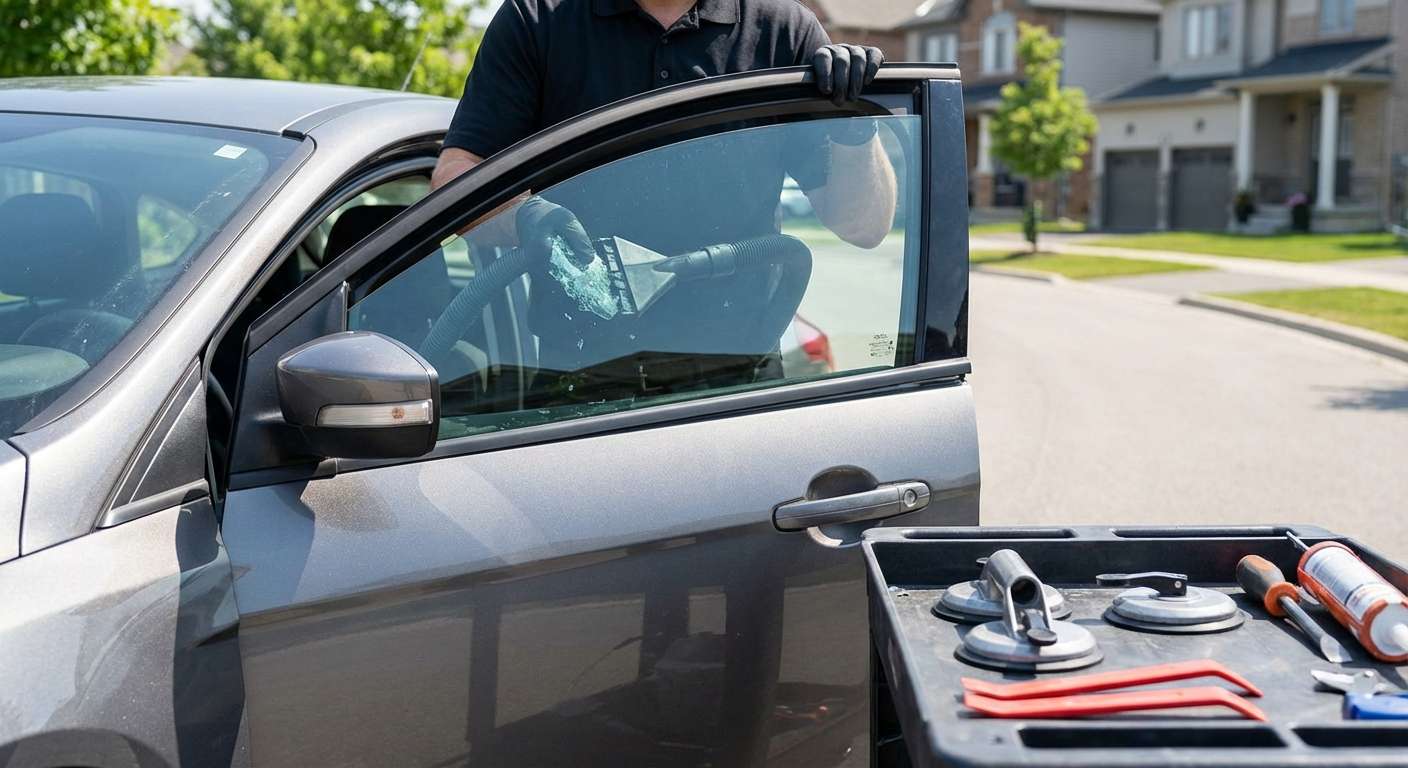
I handle these replacements as a fully mobile service, traveling directly to your home or workplace across Toronto and the GTA to vacuum the shattered debris from inside the door shell and set the new aftermarket glass. Once the replacement pane is seated securely inside the track runners and fastened to the lift mechanism, ensuring smooth travel prevents future regulator strain. Clearing the rubber channels of trapped dirt and seating the outer beltline weatherstripping squarely against the new pane eliminates the drag that causes premature clip failure.





