Framed Door Glass Structure and Mirror Sail Integration
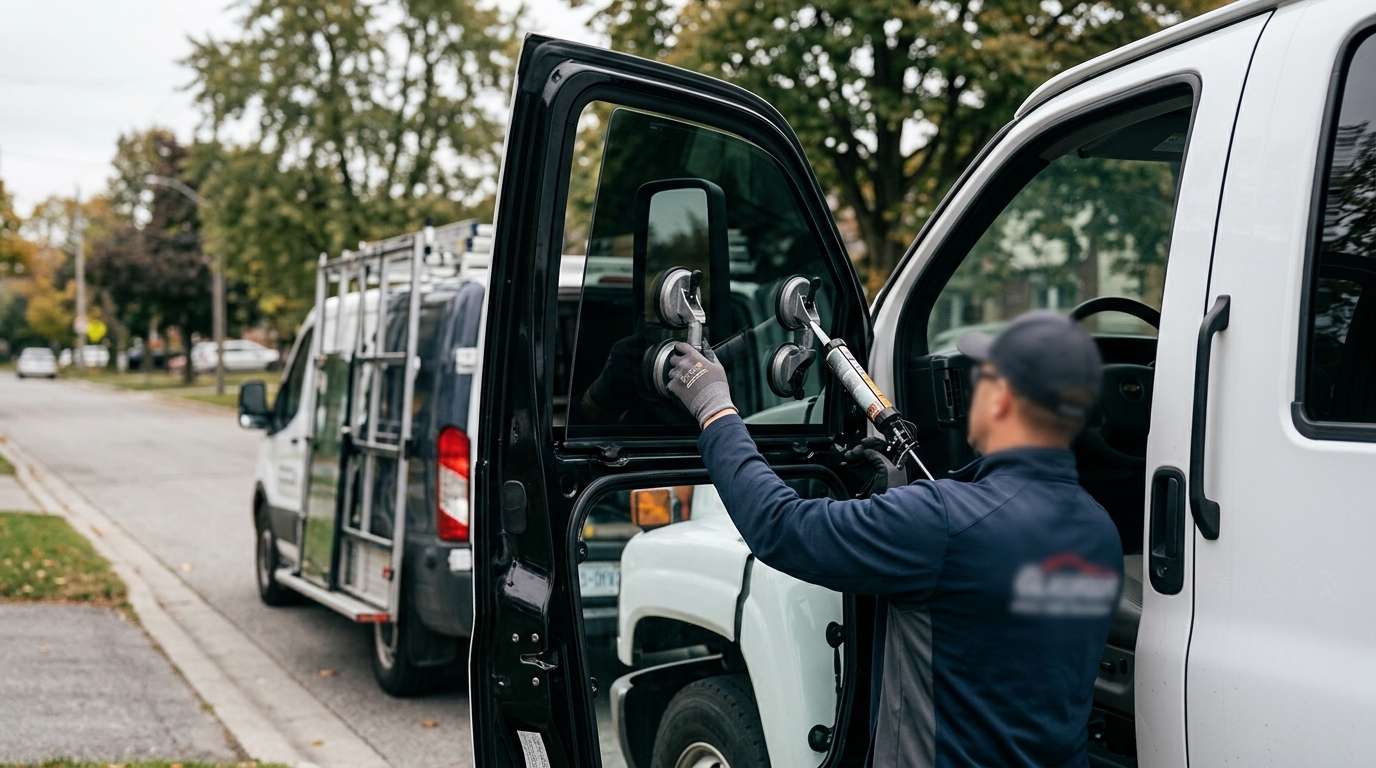
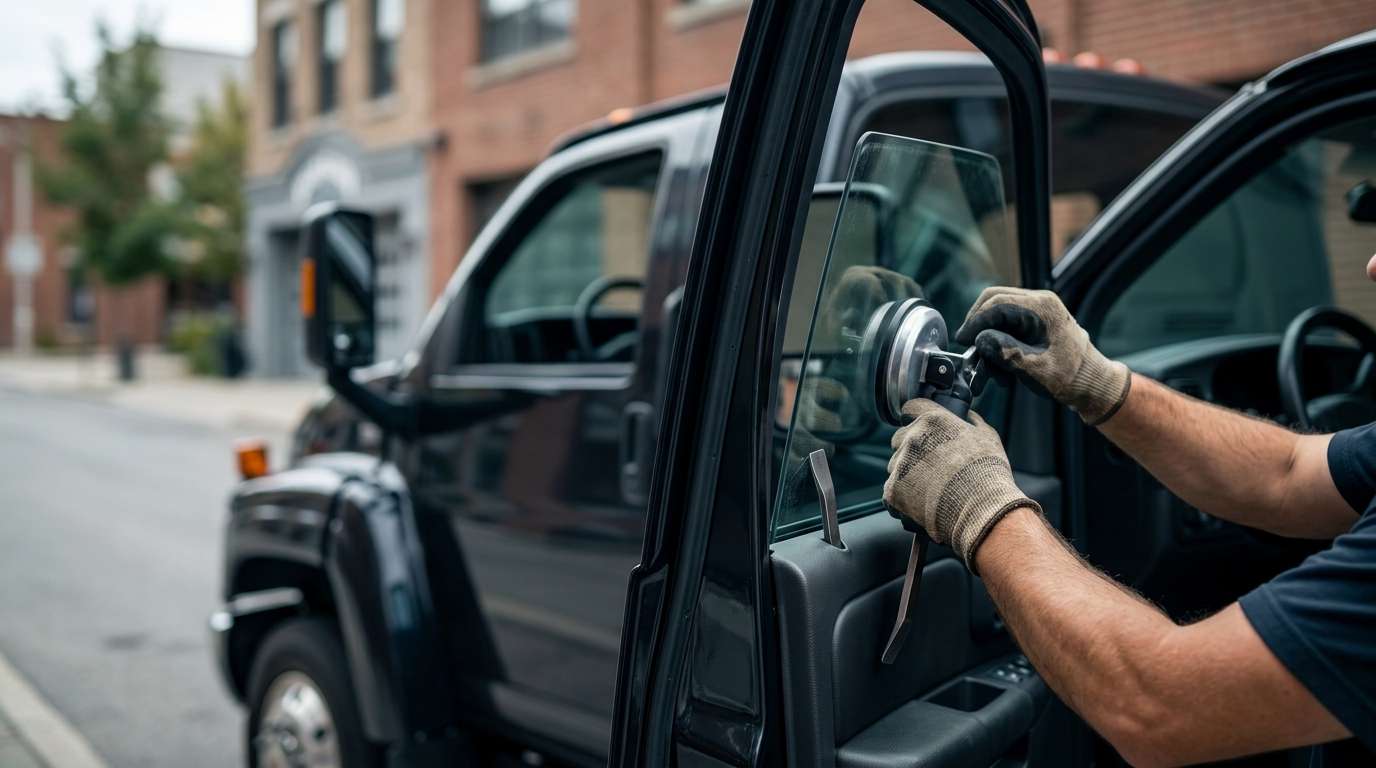
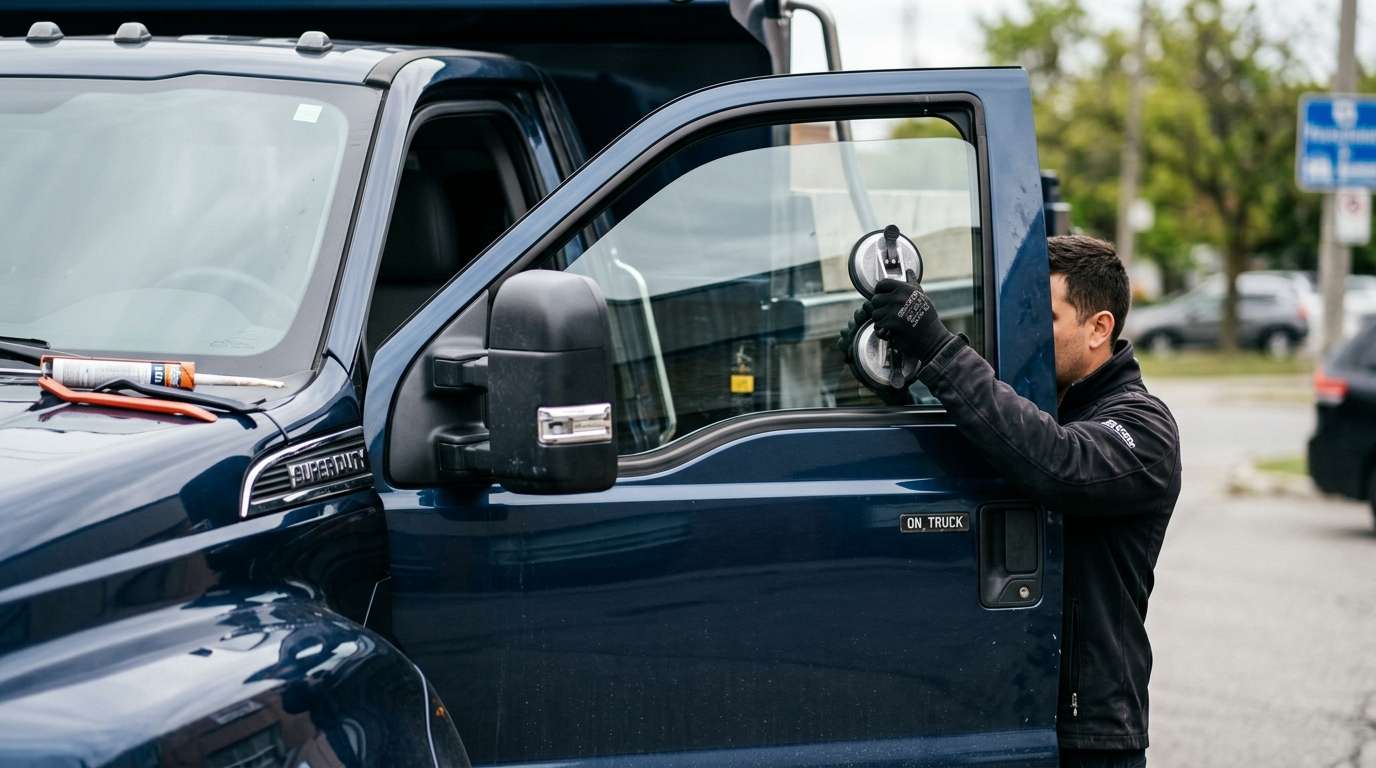
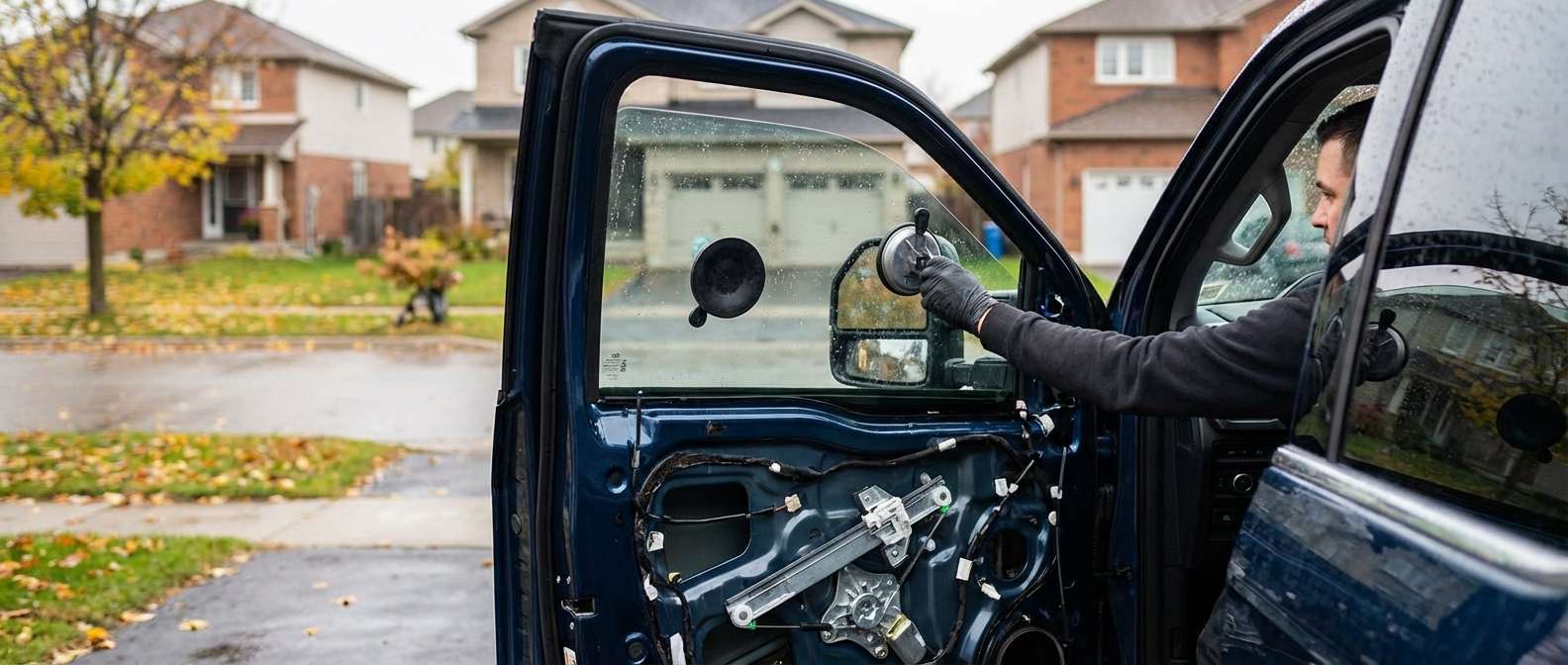
Replacing broken side windows on these heavy-duty workhorses requires understanding how Ford integrates the drop glass into the stamped aluminum door shell. Unlike frameless designs, these trucks utilize a full-perimeter framed door system with dense rubber run-channel mouldings and a rigid vertical division bar tucked directly behind the exterior mirror sail. The bottom edge of the door glass features dedicated mounting retainers that snap directly into the power window regulator lift carriage, securing the glass against track deflection when operating at highway speeds.
While the side windows do not house wire grids, rain sensors, or embedded antennas—those remain exclusive to the windshield and rear window—getting the pane seated correctly in the lower rubber tracks is crucial. If the glass sits unevenly against the mirror sail division bar, the window will experience highway air buffeting or persistent glass chatter inside the door pocket. When I replace these panels, I source solely from aftermarket glass manufacturers such as PGW, Pilkington, FYG, and XYG to ensure the edge profiles match the factory run-channel depth exactly.
Tempered Versus SoundScreen Variants Across Trim Lines
The glass composition on the front doors changes depending on how the truck was ordered from the factory. Base XL work trucks utilize single-layer tempered solar glass designed for high impact durability. Step up into the Lariat, King Ranch, Platinum, or Limited packages, and the front drop glass shifts to an acoustic laminated construction engineered to dampen diesel engine drone and exterior wind turbulence. Crew Cab configurations pair these front options with deep factory privacy tint on the rear power-drop windows, whereas SuperCab configurations rely on distinct narrow rear door shells with dedicated track dimensions.
| Cab Style & Position | Glass Configuration | Standard Tint / Finish |
|---|---|---|
| Front Driver (XL Trim) | Tempered Drop Glass | Solar Green (Base PC3Z-1521411-B) |
| Front Passenger (XL Trim) | Tempered Drop Glass | Solar Green (Base PC3Z-1521410-B) |
| Crew Cab Rear Driver | Power Drop Glass (NAGS DD13618) | Factory Dark Privacy Tint |
| SuperCab Rear Doors | Cab-Specific Window Track | Solar Green (ML3Z-1825712-C) or Dark Tint (ML3Z-1825712-D) |
Resolving Anti-Pinch Bounce-Back and Run-Channel Resistance
A frequent issue encountered after installing a new door glass on this platform is the factory anti-pinch "bounce-back" sequence. The power window motor continuously monitors electrical amperage draw to detect obstacles; if the glass encounters minor friction inside the upper rubber frame weatherstrip, the module interprets this drag as a trapped hand and instantly drops the window down several inches. Ford addressed this sensitive software logic in broad safety recalls, but the mechanical fit inside the door tracks remains the initial trigger.
To eliminate false reversals after dropping a new pane into the carriage, the motor must be put through a standard manual reset sequence:
- Hold the window switch in the down position until the glass bottoms out, maintaining the switch for an additional two seconds.
- Pull the switch to raise the window fully to the top of the door frame, continuing to hold the switch upward for two seconds after the glass stops against the upper seal.
- Release the switch, then immediately pull and hold it up once more for two seconds to lock the upper limit resistance threshold into the door module memory.
Confirming that the outer belt moulding and the vertical felt channels are fully seated prevents unnecessary drag on the glass edges, keeping the auto-up functionality running smoothly without nuisance reversals.