The Barchetta Architecture and Rear Glazing Clarification
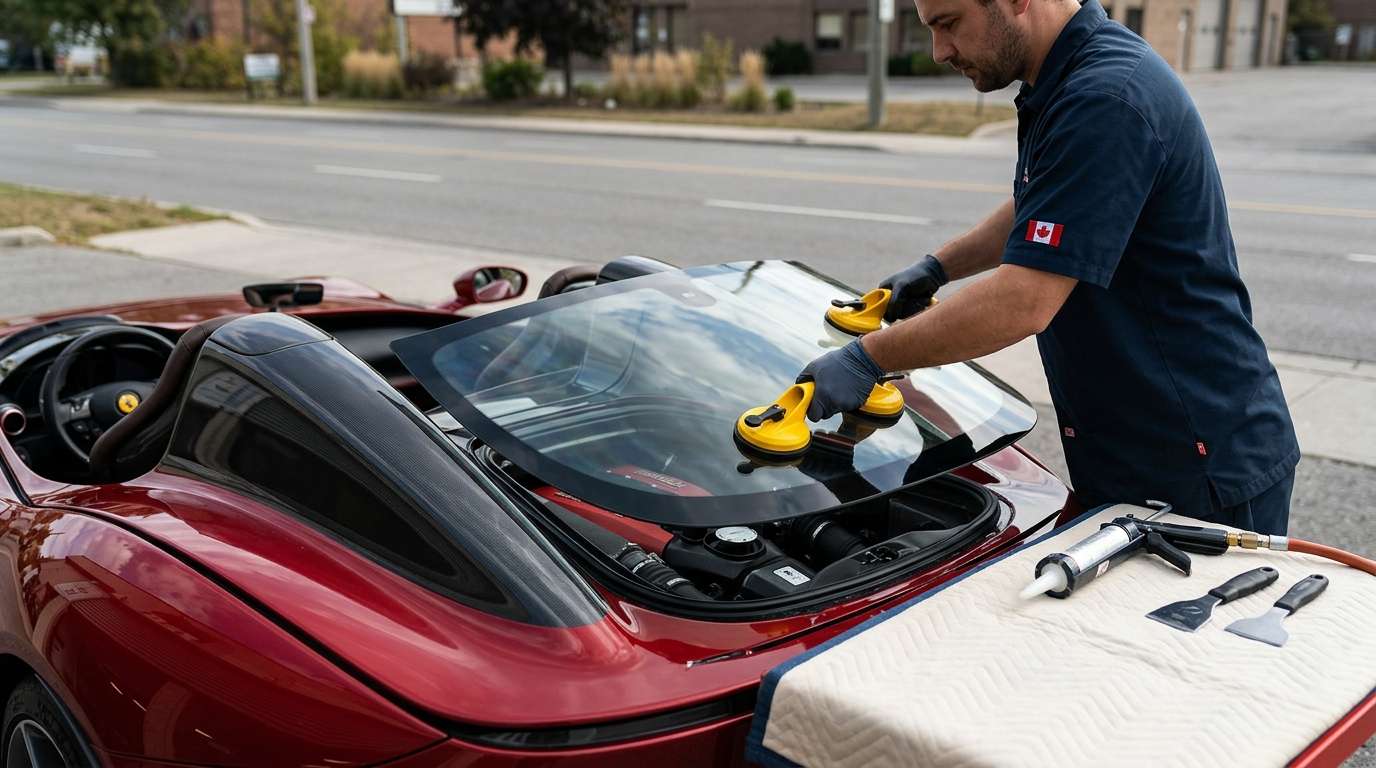
Inquiries for a rear windshield replacement on an Icona series vehicle like the Monza SP1 or Monza SP2 highlight an immediate technical reality: these open-top speedsters do not have back glass. Designed as pure barchettas paying homage to historic racers like the 1948 166 MM and the 750 Monza, neither variant leaves the Maranello factory with a rear window, frame, or mounting aperture. Third-party glass systems occasionally generate phantom entries for these models, but there is no such thing as an automotive back window for this platform.
Because there is no back window opening, no National Auto Glass Specifications (NAGS) identifier exists—such as an FB-series code commonly assigned to rear glazing—nor do Ferrari dealer catalogs list an OEM back glass part number. Where a rear window would typically sit on an 812 Superfast-derived platform, the Monza features a sculptured, structural carbon-fibre rear deck lid. On the single-seat SP1, a solid carbon-fibre tonneau cover flows behind the driver into a single aerodynamic headrest buttress. The two-seat SP2 mirrors this layout across both occupants with dual roll hoops and fairings, leaving an entirely open space between the cockpit seats and the sweeping rear bodywork.
Carbon-Fibre Body Panels Versus Traditional Rear Window Components
Automotive glazing relies on a perimeter pinchweld, dedicated rubber weatherstripping, and bonded channels. None of these elements exist behind the Monza cockpit. Instead, the rear structure is composed entirely of dry-formed carbon composites that meet the cockpit interior panels directly, with no glass regulator, power sliding mechanism, or bonded encapsulation present anywhere on the vehicle.
Whenever I handle specialized glazing jobs, I rely strictly on aftermarket glass lines sourced through trusted manufacturers like PGW, Pilkington, FYG, and XYG, but in the case of the Monza SP1 and SP2, no aftermarket or original tooling exists because the vehicle architecture has nowhere to receive glass. Standard rear window hardware found on conventional Ferrari GT cars—such as embedded defroster grids, integrated radio antennas, rear wiper motor brackets, and tinted acoustic interlayers—is completely absent. Rear illumination is achieved entirely through a continuous, sweeping horizontal LED light bar embedded into the composite tail panel above the quad exhaust diffusers, entirely separate from any transparent surface.
Checking Cockpit Rear Decks and Trim Components
When assessing the rear cabin area on an SP1 or SP2—particularly if an owner has had carbon-fibre protection applied or work done around the rollover structures—it is the structural and trim integration that matters rather than standard glass checks. If any work has been completed near the cockpit boundary, verifying panel alignment and securing elements is critical to ensure high-speed aerodynamic stability.
- Inspect the join between the carbon-fibre tonneau cover (SP1) or center spine divider (SP2) and the seat bulkheads for flush, movement-free alignment.
- Ensure the safety roll-hoop buttress covers are properly seated with zero play in their structural fasteners.
- Check that no protective films or aftermarket sealants obstruct the water drainage channels routed beneath the rear carbon aerodynamic deck.
- Verify that the continuous full-width LED rear lighting strip sits flush within the bodywork recess without stress marks or panel binding.
- Examine the cockpit boundary seals where the leather and carbon interior trim meet the raw structural rear bulkhead to ensure no retention tabs have dislodged.
Navigating Auto Glass Catalog Ghost Parts
Automated database errors remain the primary reason motorists or shops search for rear glass replacements on these vehicles. Aggregator software frequently creates theoretical listings across entire model years from 2018 to 2022 simply because the vehicle is documented in registered vehicle databases. These records imply the presence of non-existent defrosters, rubber encapsulations, or rear window glass panels. Recognizing the fundamental open-air barchetta design eliminates confusion when managing the maintenance and bodywork of these limited-run collectors' vehicles.