Extreme Curvature and the Single Icona Windshield Variant
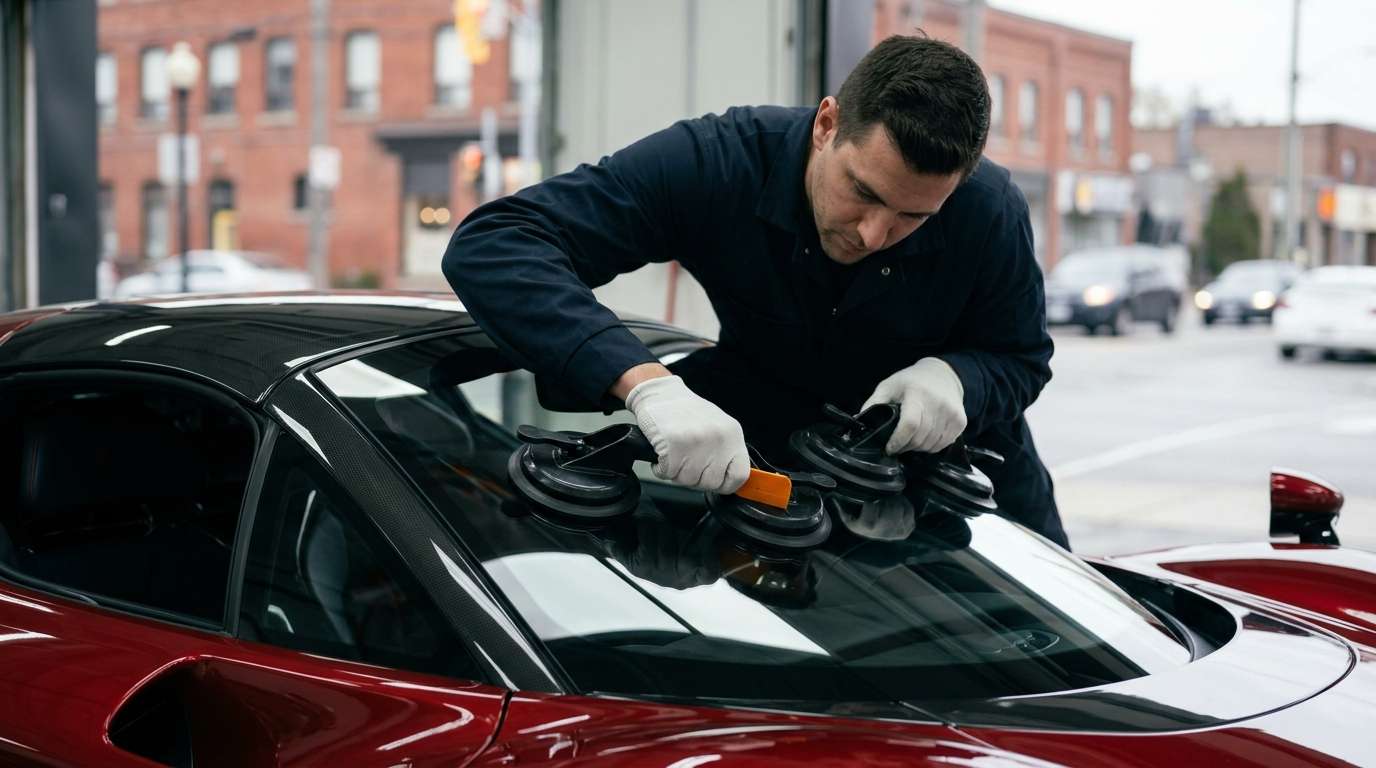
Replacing the front glass on this limited-run mid-engine car involves dealing with an aggressive wraparound panoramic curvature inspired directly by the 1960s 330 P3 and P4 endurance racers. Unlike series-production sports cars that carry multiple glass options based on interior packages or driver-assistance options, every single one of the 599 examples produced between 2022 and 2024 shares the exact same glass setup. Ferrari categorizes this entire production under factory part number 746361, serving both North American and European builds identically, with no superseded numbers or split-year design shifts across its short manufacturing span.
Because there is no standard NAGS catalog listing assigned to such an ultra-exclusive production volume, replacement units rely on precise aftermarket manufacturing standards from specialist producers like PGW, Pilkington, FYG, or XYG who engineer exact-tolerance curved lamination. The sheer sweep of the glass reaches backward toward the cockpit, meeting the carbon-fiber A-pillars at an acute rake that requires exact structural bonding tolerances to mate cleanly with the vehicle's structural composite shell.
Carbon Fiber Cowls, Roof Mating Channels, and Aerodynamic Doors
The windshield acts as a central aerodynamic anchor point rather than just a simple forward viewing window. Along the bottom, the glass sits entirely flush against an exposed carbon-fiber cowl cover designed to hide the central single wiper motor assembly. Across the top edge, the glass forms the direct leading perimeter and primary weather-seal channel for the removable carbon-fiber targa roof panel. Any millimeter variance in height or angle directly disrupts how that targa roof drops into its front locks, risking cabin drafts at high track speeds.
The sides present their own unique mechanical clearance demands. The vehicle uses dramatic butterfly-opening dihedral doors engineered with integrated aerodynamic flow ducts. When closed, the frameless side door glass seats directly against the side curvature of the windshield pillars. Ensuring the proper edge gap along these compound curved flanks is essential; otherwise, the door glass will contact the windshield edge upon opening or closing the butterfly doors.
Monocoque Contact Points and Unique Peripheral Components
Directly beneath the outer borders of the glass lies the car's primary structural tub, built using aerospace-grade T800 and T1000 carbon fiber. Because the glass is direct-glazed with minimal perimeter moulding to preserve laminar airflow over the front fenders, the structural bond adheres directly to this bare composite channel. The glass is intentionally free of excessive embedded hardware: there are no internal heated wiper grid elements running along the cowl line, and the front glass does not house internal GPS or radio antenna wires. At the base, the single center-mounted aerodynamic wiper arm sweeps from a vertical resting position across the glass, meaning alignment around the cowl cutout must remain completely square.
Post-Installation Inspection Checklist
Once the replacement glass is seated and cured, walk around the car to confirm that all intersecting carbon-fiber and mechanical components align properly:
- Removable Targa Panel Channel: Seat the roof panel into place to ensure the front rubber seal makes uniform, compressed contact along the upper windshield edge without high spots or binding.
- Butterfly Door Clearance: Slowly swing both doors open and shut, checking that the frameless side door glass clears the outer curved borders of the windshield without rubbing or catching on the weatherstripping.
- Carbon-Fiber Cowl Flushness: Inspect the lower windshield edge to verify it sits evenly parallel with the carbon-fiber wiper cowl cover along its full horizontal span.
- Central Wiper Park Position: Run the single wiper system to ensure the arm cycles smoothly across the deep panoramic rake and returns to its true aerodynamic center park position at the base.
- Perimeter Airflow Gaps: Examine the exposed edges along the A-pillars to verify the glass sits flush with the exterior bodywork for uninterrupted high-speed laminar airflow.