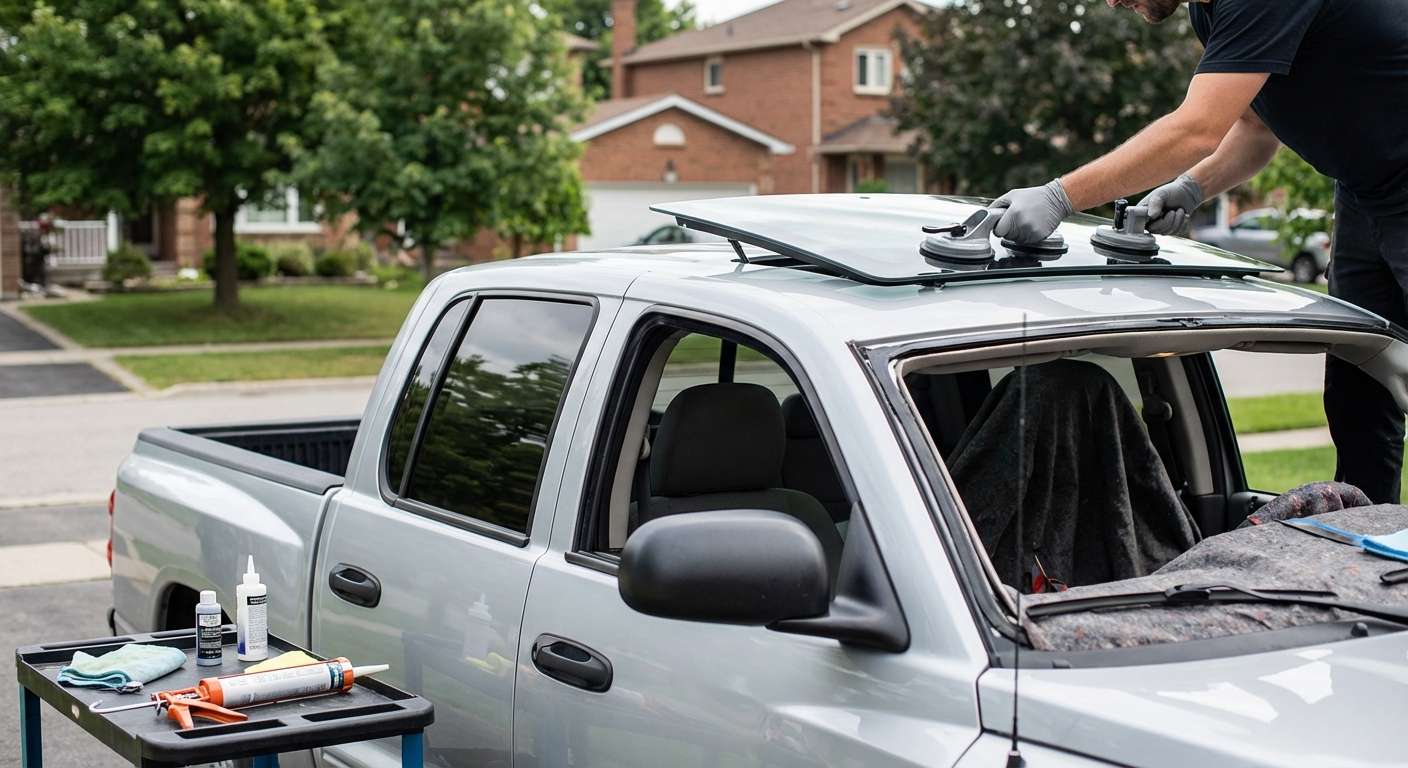
Factory Moonroof Glass and Hardware on Dakota Quad Cabs
Replacing shattered or jammed moonroof glass on these trucks requires understanding that the factory glass panel was offered solely on Quad Cab (later badged as Crew Cab) models. If you drive a regular cab or extended Club Cab from these model years, your truck never left the factory with an electric roof; any glass fitted to those smaller cabs is an aftermarket retrofit. For the Quad Cab, the factory electric tilt-and-slide unit utilizes dark-tinted tempered safety glass that seals directly against the stamped roof sheet metal without any exterior reveal mouldings or trim strips.
The original glass panel carried Mopar part number 5174504AA. Unlike modern front windshields or rear sliders that house rain sensors, defroster lines, or embedded radio antennas, this moonroof panel is a bare glass assembly. It features a factory-vulcanized rubber encapsulation edge that wraps the complete perimeter to seal against wind and heavy rain. Beneath the glass, the assembly integrates with a sliding interior fabric sunshade (OEM base UX06BD1AA) and an automatic pop-up wind deflector (part number 05066895AB) that springs upward along the leading edge when the glass retracts into the cab roof.
Addressing Broken Glass and Mechanism Failures
A shattered Dakota moonroof is straightforward to diagnose, but broken glass is often a symptom of underlying mechanical failure inside the roof cassette. The factory cable drive guides and plastic track lift arms (part number 05066433AC) become brittle with age and heat. When these plastic brackets crack, the panel twists in the track, binding under motor load or tilting unevenly until stress shatters the tempered pane. Replacing the glass requires accessing the Torx mounting fasteners concealed directly behind the snap-on interior side sight shields.
Whenever I replace this glass assembly, my workmanship is backed for as long as you own the Dakota, paired with one year of warranty coverage on the replacement glass panel itself. Addressing cracked drive brackets and checking the internal track alignment prevents the replacement glass from binding against the stamped steel roof opening.
Water intrusion is the other primary concern on this platform. The rubber seal around the glass is designed to deflect the vast majority of rainwater, but moonroof pans rely on secondary drainage. Water bypassing worn perimeter seals enters the internal drip tray and drains down internal tubes routed through the A-pillars and C-pillars. If road debris or dried pine needles clog these passages, water backs up into the overhead console, saturates the cab headliner, and pools in the front carpet footwells.
Inspection Checklist for Your New Moonroof Glass
Before putting your truck back on the road, inspect the replacement panel to verify smooth operation and proper weatherproofing:
- Flush Roof Alignment: The glass panel must sit perfectly level with the stamped outer roof skin, resting slightly lower than the leading sheet metal edge to prevent wind buffeting.
- Even Perimeter Compression: The continuous rubber seal must show uniform, tight contact around all four sides of the roof opening with no pinched or sagging sections.
- Mechanical Travel: The panel must glide smoothly through the vent, tilt, and full-retract cycles without lurching, binding, or motor strain.
- Wind Deflector Engagement: The spring-loaded front deflector (05066895AB) must rise smoothly as the glass retracts and fold down cleanly without catching as the panel closes forward.
- Interior Fitment: The snap-on plastic sight shields must be firmly seated over the mounting brackets, and the UX06BD1AA sunshade must slide freely along its lower track.
- Drain Tray Flow: Pouring water into the drainage channel must result in immediate drainage out through the A-pillar and C-pillar tubes onto the ground behind the wheel wells.





