Engine Heat, Grime, and the C8 Rear Showcase Hatch
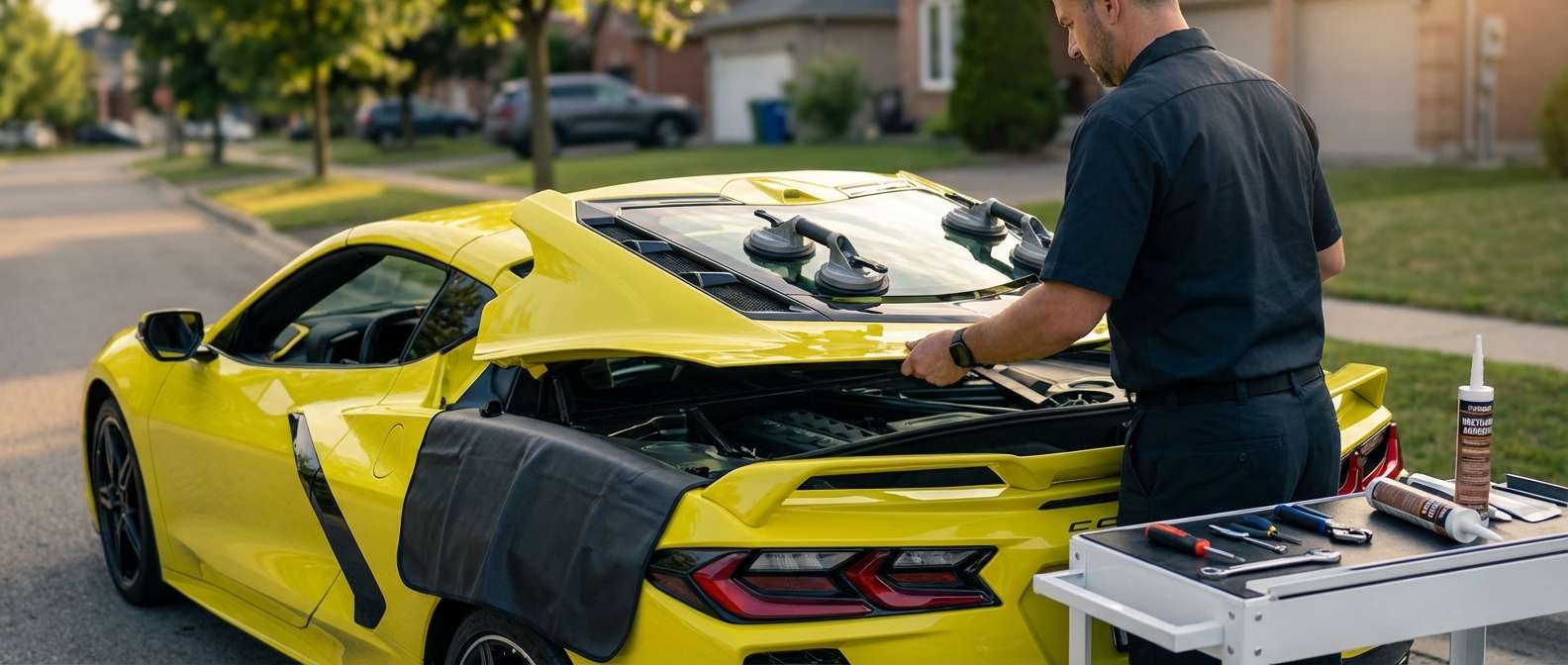
The rear back glass on the Stingray, Z06, and E-Ray Coupes acts as a functional transparent canopy directly over the mid-mounted engine rather than sealing the passenger compartment. Because the cabin is partitioned off further forward, this exterior hatch glass endures intense radiant thermal cycles radiating off the LT2, LT6, or hybrid battery hardware below. Owners frequently find that the functional heat-extraction vent louvers flanking the back glass allow dust, road kick-up, and rain to deposit stubborn film on the underside of the panel. Cleaning this inner surface is notoriously awkward due to the low-angle rake over the engine cover, and tint shops routinely struggle with aftermarket film bubbling from the thermal blast underneath.
Unlike traditional coupes where the rear window shields passengers from the elements, here the liftback works alongside a power-cinching pull-down latch designed to pull the massive frame down tight without creating air bursts against the engine bay. Because this glass is exposed to both outside weather and under-hood turbulence, any hairline crack from road gravel can spread quickly under the contrasting temperatures between outside air and engine warmth.
The Defroster Grid Evolution and Body Integration
For the 2020 through 2025 model years, the Coupe hatch glass shipped with heavy, printed electric defroster grid lines embedded directly across the center viewing area. Mid-engine Corvette forum discussions are full of complaints regarding how severely those horizontal orange heating lines broke up the sightline into the decorative engine cover and carbon-fiber engine appearance package. General Motors addressed this design flaw starting with the 2026 model year by eliminating the defroster wires from the Coupe hatch entirely, leaving completely bare, unobstructed safety glass. In contrast, the Convertible (HTC) uses a totally different vertical power back glass nestled between the rear nacelles behind the seats, which retains its built-in defogger grid across all production years.
Replacing this rear glass means navigating tight tolerances against the surrounding body panels. The central high-mount stop light sits integrated right at the forward upper edge within the roof nacelle assembly, while the upper rear-facing camera mirror found on 2LT, 3LT, 2LZ, and 3LZ trims is built into the outer roof structure above rather than mounted on the glass surface. I travel directly to your home or office across the Greater Toronto Area to complete this glass replacement on-site, ensuring the delicate composite surround trim and heat louvers remain completely untouched during the changeover.
Coupe Canopy vs. Convertible Power Glass Differences
Addressing damage on these cars requires knowing which configuration you are driving because the components do not interchange. Coupe hatch glass is bonded structurally as a stationary pane within the swinging hatch frame, requiring careful alignment with the rear quarter vents. The Convertible back glass is a miniature vertical partition that retracts independently into the bulkhead to reduce cabin buffeting when the roof is stowed. Ensuring the replacement pane seats precisely flush with the surrounding composite louvers prevents wind whistles at highway speeds and keeps exterior road spray from pooling around the rear cargo trunk seals.