Hofmeister Kink Architecture and Framed Rear Door Channels
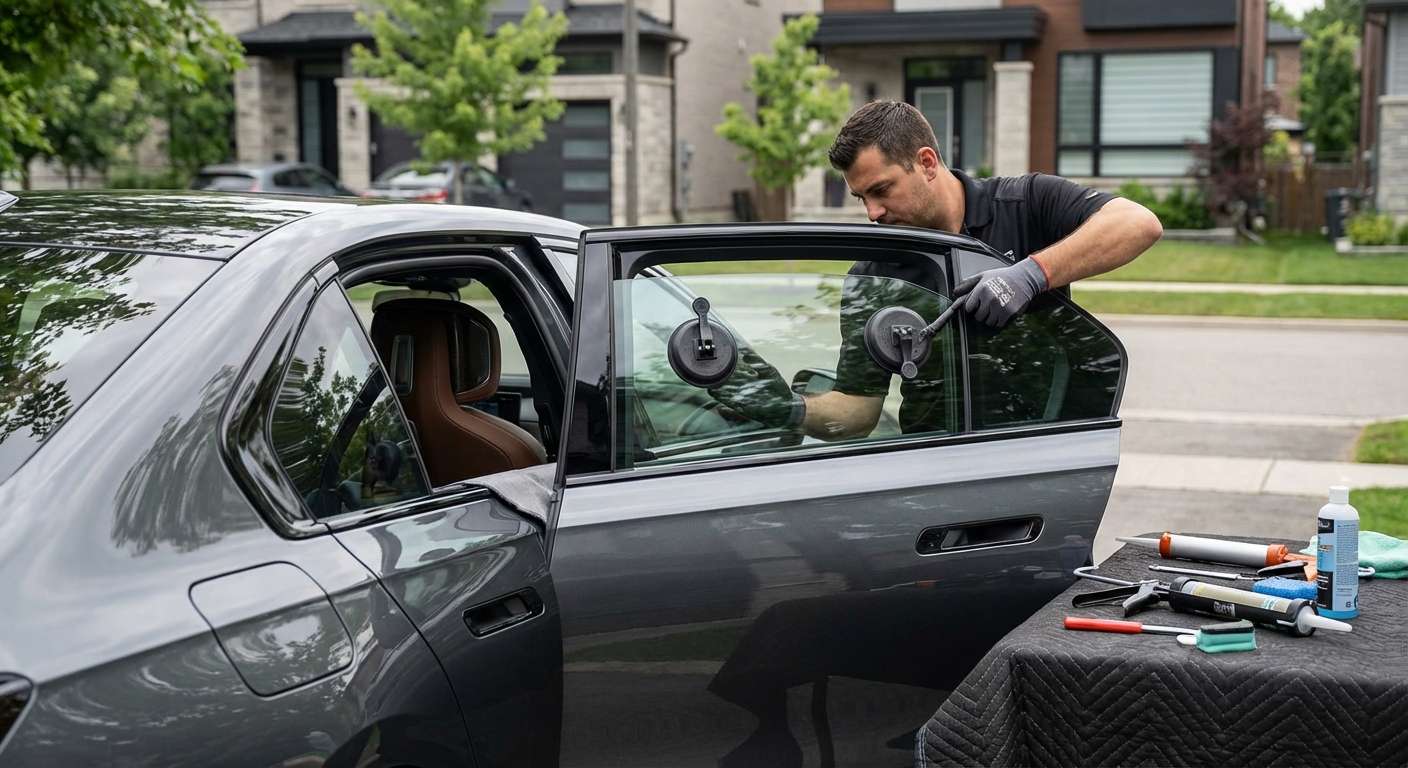
Replacing the rear vent window on this flagship sedan involves dealing directly with the iconic Hofmeister kink, which is built right into the trailing edge of the rear passenger door frame rather than the vehicle body. Unlike frameless coupe configurations, these full-size doors utilize a rigid window perimeter with deep-set encapsulated weatherstripping. Dividing the main lowering window from this stationary rear quarter pane is an upright guide channel and run division bar (linked to parts series 51-35-5-A2F-9D5). Servicing this fixed corner unit requires disassembling the rear inner structure without disturbing the tight tolerances of the exterior surround, which is finished in either high-gloss Shadowline trim or satin aluminum brightwork.
Interior Touch Command Screens and Acoustic Glass Specs
Working behind the rear door card is unlike servicing standard vehicles because the inner panel integrates the BMW Touch Command system—a 5.5-inch high-resolution touchscreen built into each rear armrest that manages HVAC, seating positions, and the motorized roller sunshades. The vertical guide tracks for these automated roller blinds run adjacent to the division bar and upper retention hooks (clip 51-35-7-479-511), meaning everything must be kept strictly square to prevent binding when the blind deploys. For vehicles ordered with the automated power doors from the Executive Package, the shell also houses external ultrasonic proximity sensors that must stay undisturbed while the hardware is unbolted.
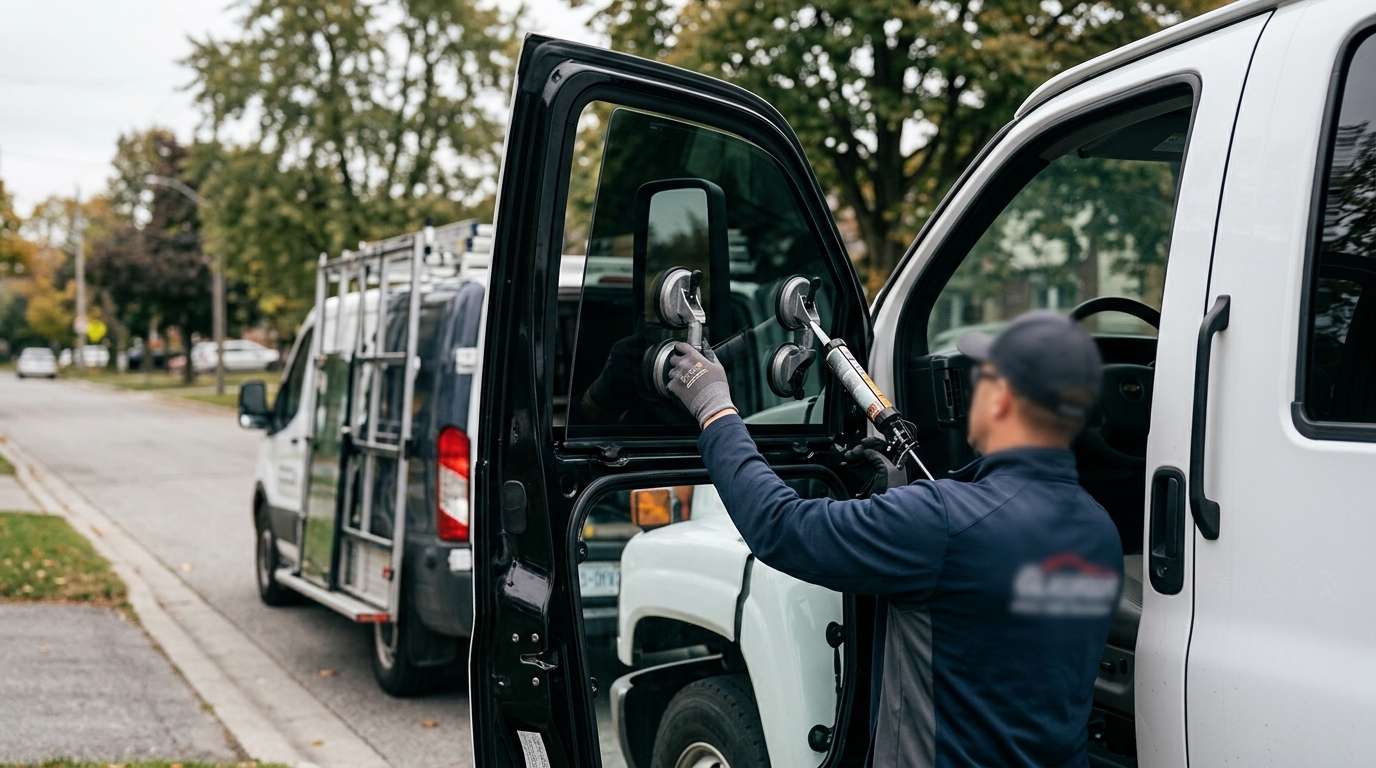
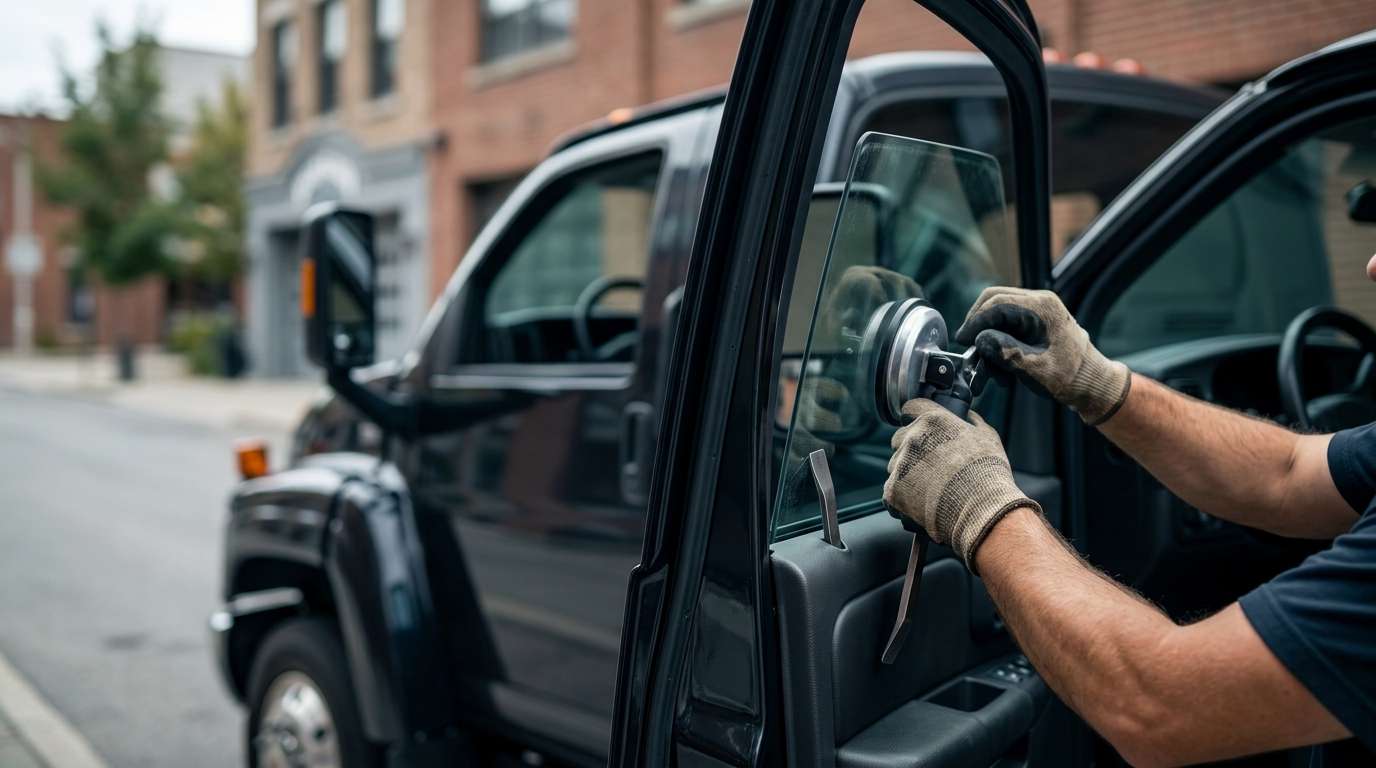
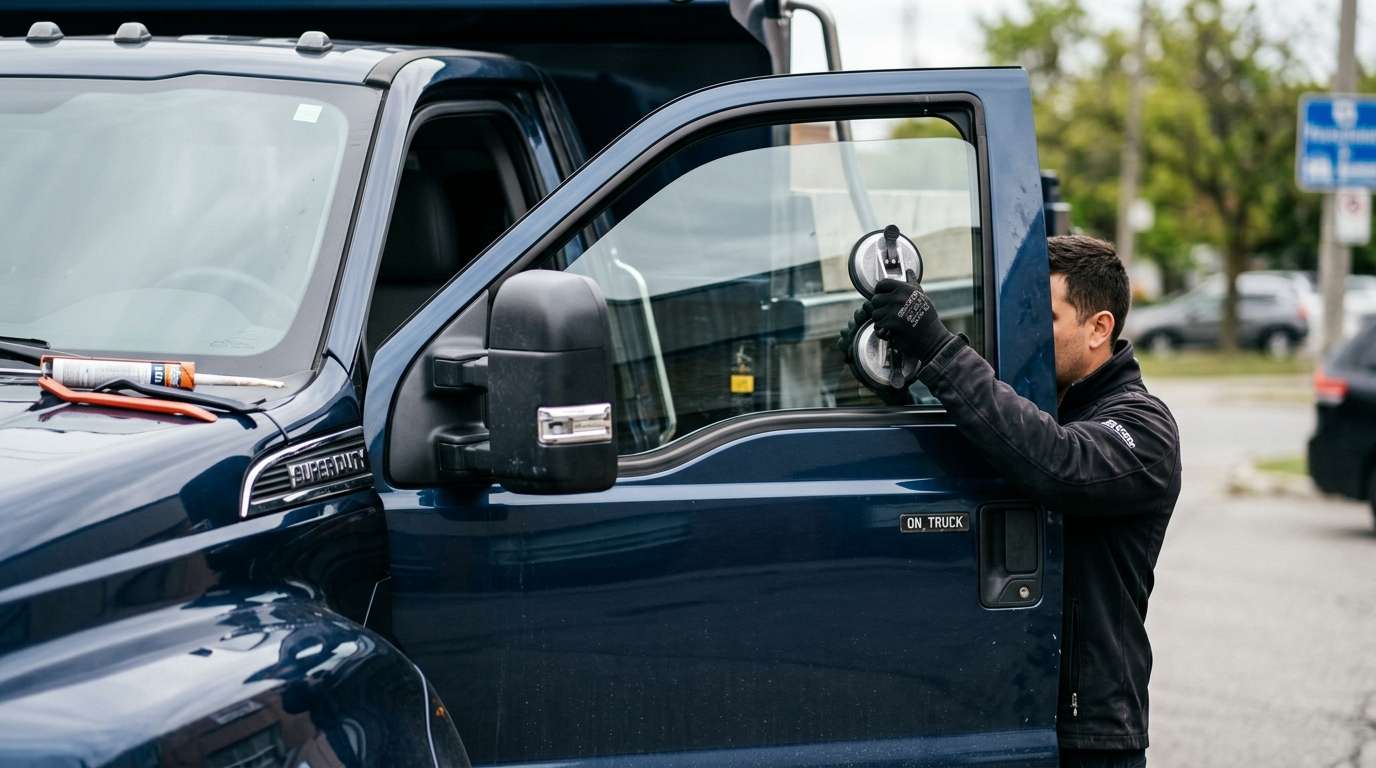
I operate entirely as a mobile service, bringing all the tools and parts directly to your home or workplace across Toronto and the GTA to replace this broken side glass on site. The replacement panels must match the car's factory acoustic comfort specification; BMW uses double-layer acoustic laminated glass here to suppress low-frequency road turbulence and maintain the whisper-quiet interior. Replacement units are selected based on whether the car left the factory with standard acoustic lamination or the optional Climate Comfort solar-attenuating specification, alongside matching the factory privacy glass tint depth.
| Component / Feature | Design Specification |
|---|---|
| Glass Structure | Acoustic laminated safety glass (optional Climate Comfort infrared layer) |
| Exterior Surround | High-gloss Shadowline or satin aluminum brightwork |
| Hardware Interfaces | Vertical division bar 51-35-5-A2F-9D5, sunshade hook 51-35-7-479-511 |
| Door Electronics | Touch Command 5.5-inch armrest display, power door proximity sensors |
| Demisting Method | Directed cabin air vents (no embedded glass wire grids) |
Does the rear vent glass have embedded defroster lines?
No, there are no electric heating elements inside this stationary pane. Demisting and defrosting for the rear quarter area rely exclusively on ducted airflow delivered through the door and B-pillar HVAC vents.
Can the quarter glass be replaced without removing the inner door panel?
No, the lower mounting points of the division post and the fasteners securing the glass within its run channel are tucked behind the interior door card. The panel housing the Touch Command interface must be disconnected to release the fixed glass assembly.
Are there sensors mounted on the vent glass surface?
No rain sensors or driver-assistance cameras are attached to the rear door vent glass. The only external electronic elements nearby are the door-edge proximity sensors set into the metal skin of the door shell for the automated opening mechanism.