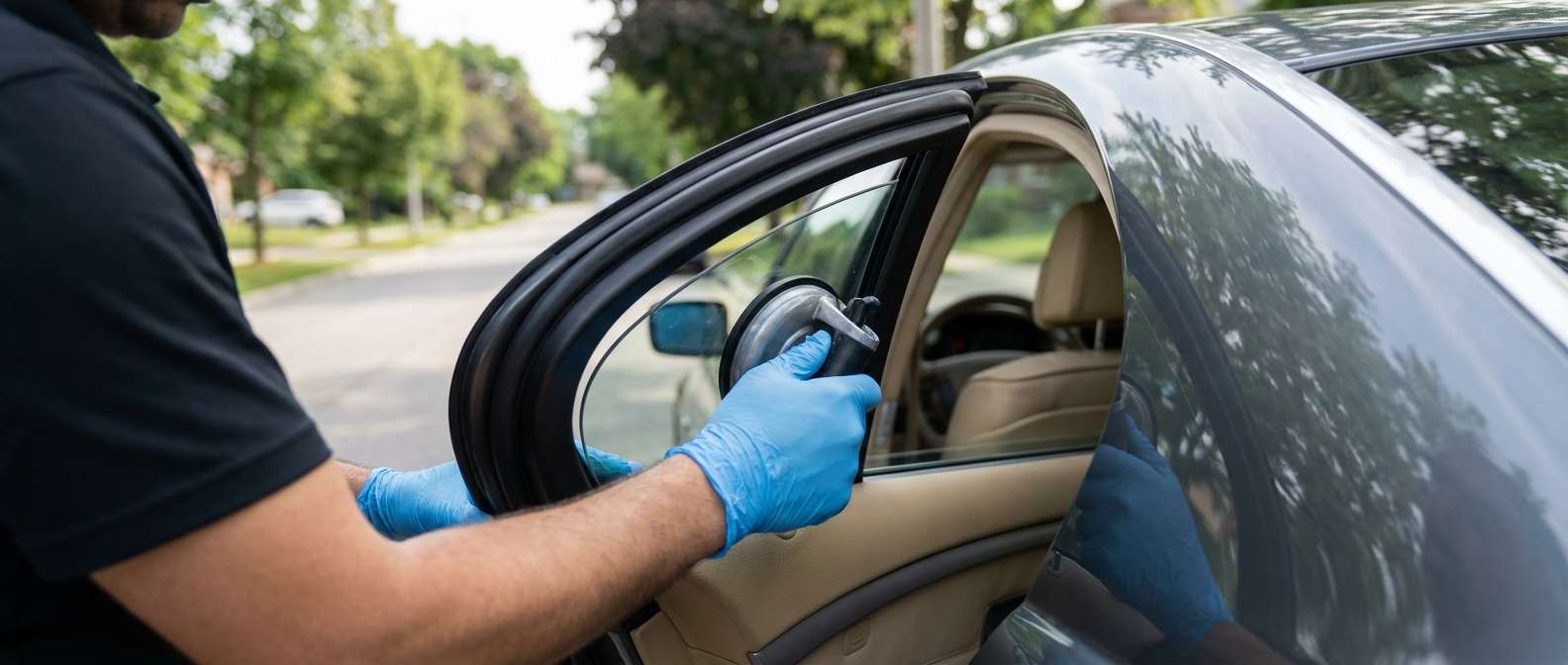
Sourcing the Correct Rear Door Quarter Window
When the triangular rear door glass on this luxury sedan shatters, finding the matching replacement panel requires paying close attention to wheelbase measurements and factory glass options. Standard-wheelbase cars take NAGS part numbers FV21495 for the left side and FV21494 for the right side. If your car is the extended-wheelbase E66 model—badged as an Li rather than an i—these panels will not fit your car because the entire rear passenger door shell is physically longer, meaning the fixed quarter window is substantially wider. Double-checking your vehicle's registration or door jamb label prevents ordering glass designed for the extended cabin.
You also need to identify the exact glass composition fitted to your car from the factory. Base configurations came with standard single-pane green solar tint, though dark factory privacy tint was also offered. Many of these executive sedans left the factory with optional dual-pane acoustic glass, often referred to in BMW documentation as climate comfort insulated safety glass. These dual-pane units sandwich a specialized polyvinyl butyral interlayer between two thin sheets of glass to deaden exterior road noise and reduce cabin heat soak. While dual-pane panels are exceptionally quiet, they frequently suffer from perimeter seal degradation over time, showing a milky discoloration or fogging around the borders. Sourcing an aftermarket replacement panel with the matching tint and thickness profile ensures the exterior appearance aligns perfectly with the adjacent roll-down glass.
Navigating the Division Bar and Door Frame Trim
This rear door vent window is a stationary piece set firmly inside a fully framed door structure, unlike the frameless setups found on BMW coupes. A vertical metal division bar and run channel physically separates this stationary glass from the primary drop glass. The drop glass rides directly inside a felt guide channel molded along the front face of this division bar, while the rear face holds the rubber weatherstripping that seals against the triangular vent glass. Surrounding the outer perimeter of the glass is the vehicle's upper window frame trim, finished either in high-gloss Shadowline black or traditional chrome and matte aluminum moulding.
Accessing the mounting points and freeing the old glass requires completely stripping the interior rear door card, peeling back the inner acoustic foam vapor barrier, and loosening the lower fastener of the division bar so it can tilt forward. I stand behind my workmanship for as long as you own the car, and the replacement glass carries a full one-year warranty against structural defects. Care is mandatory around the door wiring harness and the metal frame retainers, as bending the division bar even slightly will cause the main roll-down glass to bind or trigger the anti-pinch motor mechanism when rolling up.
Managing Integrated Roller Sunblinds During Replacement
Vehicles ordered with electric side sunshades incorporate a dedicated secondary mini roller sunblind tucked specifically behind this vent window. Unlike the primary rectangular blind that rises vertically to cover the main roll-down window, this triangular vent shade deploys horizontally across the fixed pane using a dedicated miniature drive arm. The moving plastic guide clips and track sliders for this smaller shade become exceptionally brittle with age and heat exposure, often snapping if disturbed aggressively while the division bar and glass are removed.
Shrinking or peeling leather along the upper sill of the interior door panel is another widespread issue on these doors. When the leather backing pulls upward near the glass edge, it pinches against the bottom track of the vent sunblind, causing the tiny motor gears to grind or seize entirely. When clearing broken glass shards from the lower door cavity, the delicate shade mechanism must be manually protected and aligned to ensure the mechanical arms do not bind against the newly installed glass or the interior trim rubber.





