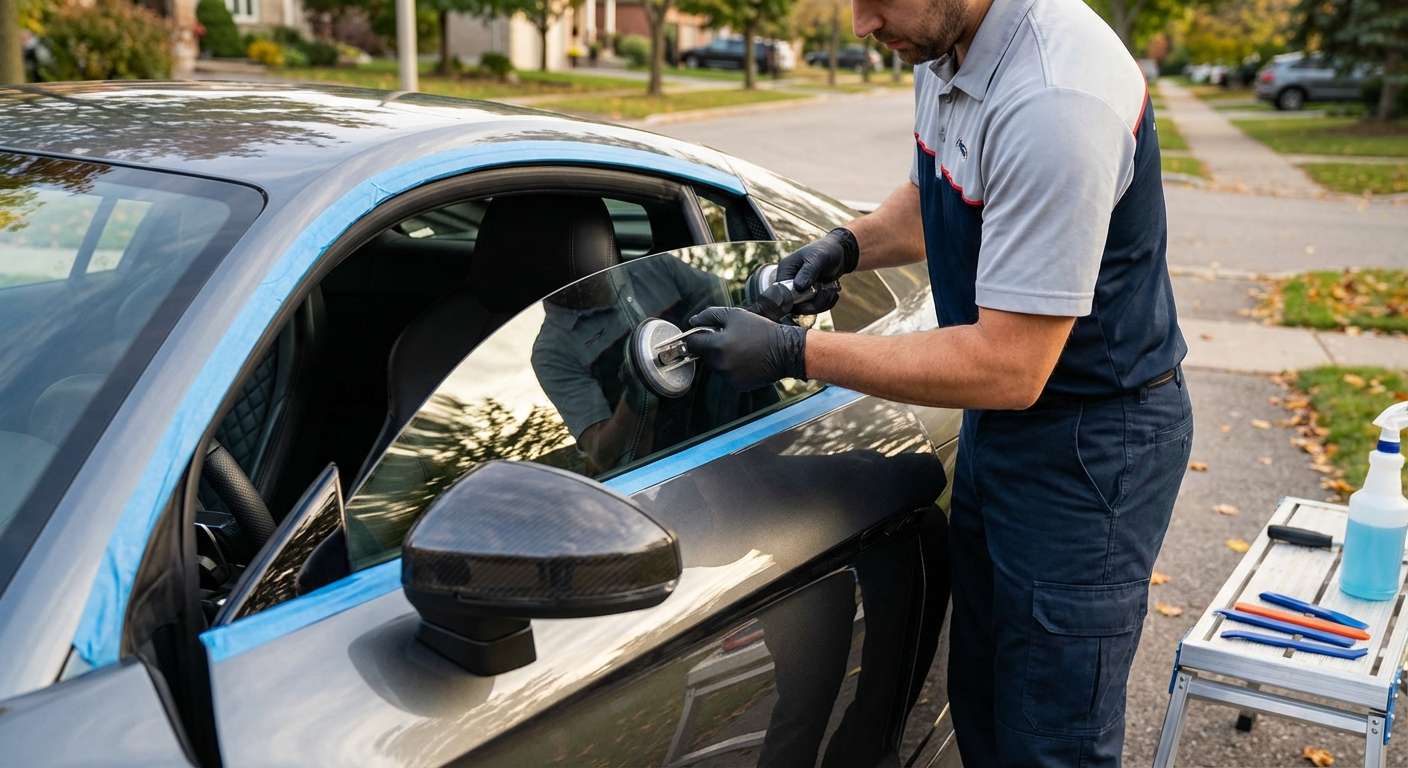
Frameless Door Glass Engineering on the Typ 4S R8
Working on the second-iteration Audi R8 means dealing with a completely frameless side window profile that directly affects cabin pressure and aerodynamics. The door glass on both the Coupe and the Spyder does not feed into a stamped metal upper window frame; instead, the bare top and front edges seal directly against heavy-gauge rubber weatherstripping mounted to the A-pillar and roof arch. Because the glass lacks perimeter metal support, the car relies on a micro-drop indexing feature: lifting either exterior door handle triggers the window motor to instantly drop the pane by 10 to 15 millimeters so it clears the deep rubber channel without snagging. If this drop geometry is even slightly off, closing the door risks fracturing the glass against the roof rail.
The side glass itself is free of embedded electronics like defrost traces or driver-assist hardware, which are housed in the front windshield or rear bulkheads. Instead, physical glass fitment dictates everything. Between the two body variants, the profiles diverge: Coupe models rely on part numbers such as 4S8845202 for the right front door, whereas Spyder convertibles demand a distinct curvature under numbers like 4S7845201 to align with the folding soft-top fabric seals and rear quarter caps. When I supply and fit a replacement side window, the glass panel comes with a one-year warranty, while my own mechanical labor and sealing alignment are backed for the lifetime of your car.
Regulator Architecture and In-Door Pitch Alignment
Holding this bare pane in place is a twin-rail, cable-operated regulator system mounted behind the interior door card. Audi separates the regulator assemblies by body style—a Coupe driver's mechanism (such as 4S8837461B) will not properly index inside a Spyder door shell. Replacing broken or damaged door glass demands removing the door card, clearing the horizontal felt scraper mouldings at the beltline, and accessing the lower clamping brackets. The clamping points are fully adjustable to dictate glass pitch, inboard tilt, and vertical limit stops.
| Component / Feature | Coupe (Typ 4S) | Spyder (Typ 4S) |
|---|---|---|
| Driver Side Glass Reference | DD12635 / 4S8845201 | 4S7845201 |
| Passenger Side Glass Reference | DD12636 / 4S8845202 | 4S7845202 |
| Upper Glass Sealing Target | Fixed roof arch rubber moulding | Convertible soft-top perimeter seal |
| Regulator System Style | Dual-rail cable track (e.g. 4S8837461B) | Convertible-specific cable carrier |
| Indexing Drop Depth | 10–15 mm downward clearance | 10–15 mm downward clearance |
Achieving the correct inward cant against the roof moulding is critical on the R8. If the glass clamps are tightened with too much outboard lean, highway air speeds will pull the pane outward, generating loud cabin buffeting. If clamped with excessive inboard tilt, the glass puts heavy friction on the side seals, which can trip the regulator motor's anti-pinch protection and reverse the window automatically.
Post-Replacement Inspection Checklist
- Verify the 10–15 mm automatic drop functions the instant the exterior door handle is lifted, clearing the upper weatherstrip before the latch releases.
- Confirm the glass slides smoothly through the lower outer waistline scraper moulding without dragging, catching, or generating motor strain.
- Ensure the upper glass edge tucks evenly into the A-pillar and roof weatherstrip along its entire length when the door is shut.
- Check that the interior door card, speaker grilles, and mirror base trim pieces sit flush with no displaced retaining clips or damaged leather edges.
- Run a high-pressure water test along the A-pillar join to verify the pitch stops prevent moisture from bypassing the body weatherstrip.





