Dual-Panel Panoramic Glass Architecture on the Q5
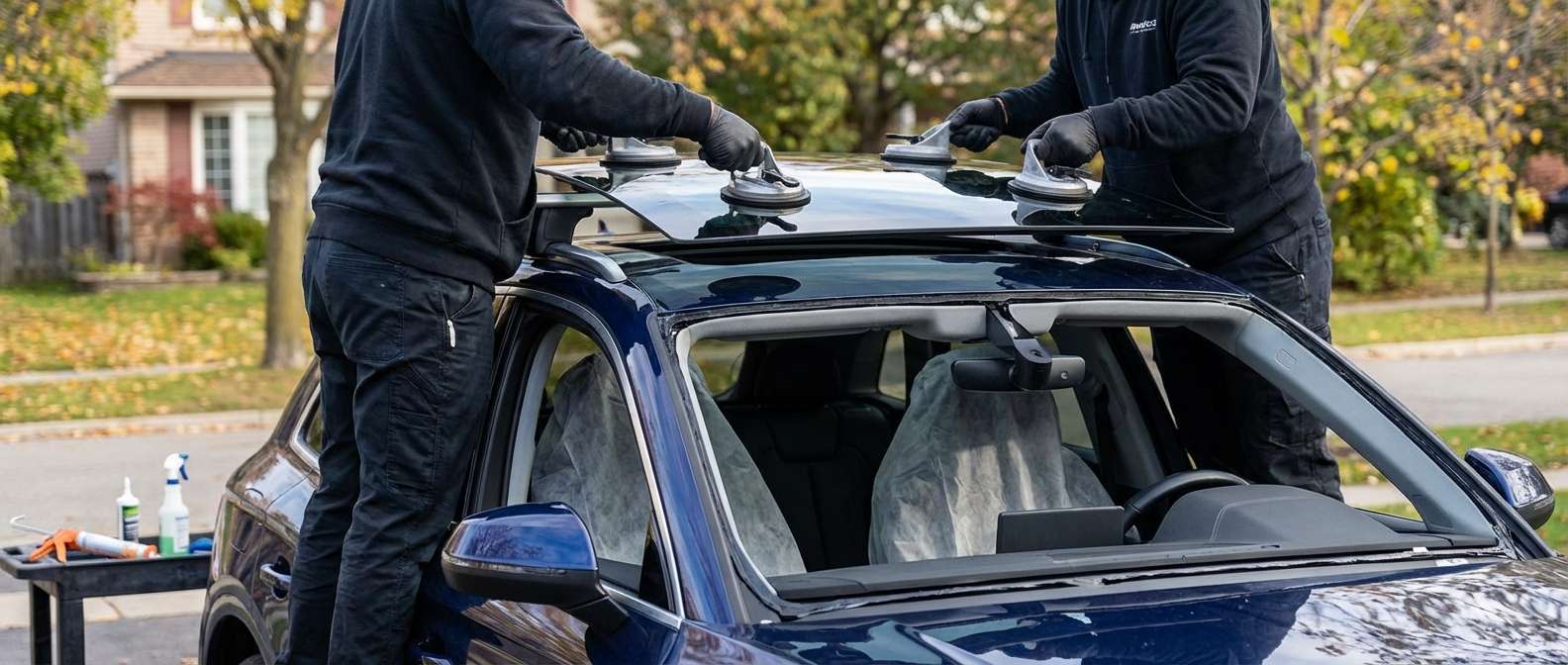
The roof setup on this vehicle divides overhead coverage into two distinct sections: an active, sliding front glass panel and a stationary rear panel. When impact damage shatters the overhead unit, knowing which piece needs replacement dictates the scope of the repair. The forward movable pane corresponds to dealer reference 80A-877-041-P, whereas the rear fixed pane corresponds to part number 80A-877-056-A. Both panels arrive from the factory with deeply saturated dark solar tint and pre-bonded edge encapsulation that seals flush against the painted steel roof skin and factory roof rails.
Because the panoramic glass does not house embedded electronics like rain sensors, forward-facing camera brackets, or defroster lines, the physical panels themselves remain purely structural and acoustic. The complexity lies beneath the perimeter edges. The sliding section is driven along dedicated mechanical tracks via cable drives connected to an electric motor, functioning in tandem with a deployable front mesh wind deflector and a power-operated fabric roller shade built directly into the overhead cassette assembly, referenced by base number 80A-877-049-F.
Diagnostic Nuances, Fast Dispatch, and Factory Service Bulletins
Audi documented several specific operational flaws across this production run that often mimic broken glass or track failure. Technical Service Bulletin 2063187 focuses on the outer perimeter seal pulling away from the sunroof opening, which creates severe cabin wind noise long before any structural glass compromise occurs. Another common issue addressed under TSB 2054505 involves the sliding pane and roller blind desynchronizing from the overhead console switches, requiring basic motor adaptations rather than physical hardware swaps.
When heavy road debris genuinely fractures either section of glass, getting the vehicle sealed against unexpected weather cannot wait, so I typically arrive about sixty minutes after you confirm your appointment to inspect the track guides and get to work. Creaks and rattles reported on the FY platform frequently trace back to dry contact rubber or shifting torx fasteners on the sliding guide shoes. Addressing these points with specialized Krytox paste during a panel replacement prevents the annoying ticking noises that can otherwise transmit straight through the B-pillar trim into the passenger compartment.
Water Drainage Paths and Interior Protection
A compromised glass seal or shattered panel immediately threatens the extensive internal drainage network. Runoff entering the perimeter gap is routed through four internal corner channels that feed into flexible drainage hoses descending behind the A-pillars up front and the C- and D-pillars in the rear. Audi TSB 2056944 details how pinched or disconnected lower drain hoses allow bypassed water to pool beneath the cabin flooring, which puts critical floor-mounted control modules directly in harm's way.
Swapping out the damaged pane requires complete isolation of the interior trim. The headliner edge, pillar covers, and internal roller shade must be shielded from falling safety glass fragments, as tiny shards lodged within the roller blind fabric will permanently tear the tensioned material the moment it retracts. Ensuring the track guides are completely clear of glass fragments restores the proper mechanical alignment needed for the weatherstripping to seal evenly against the vehicle body.