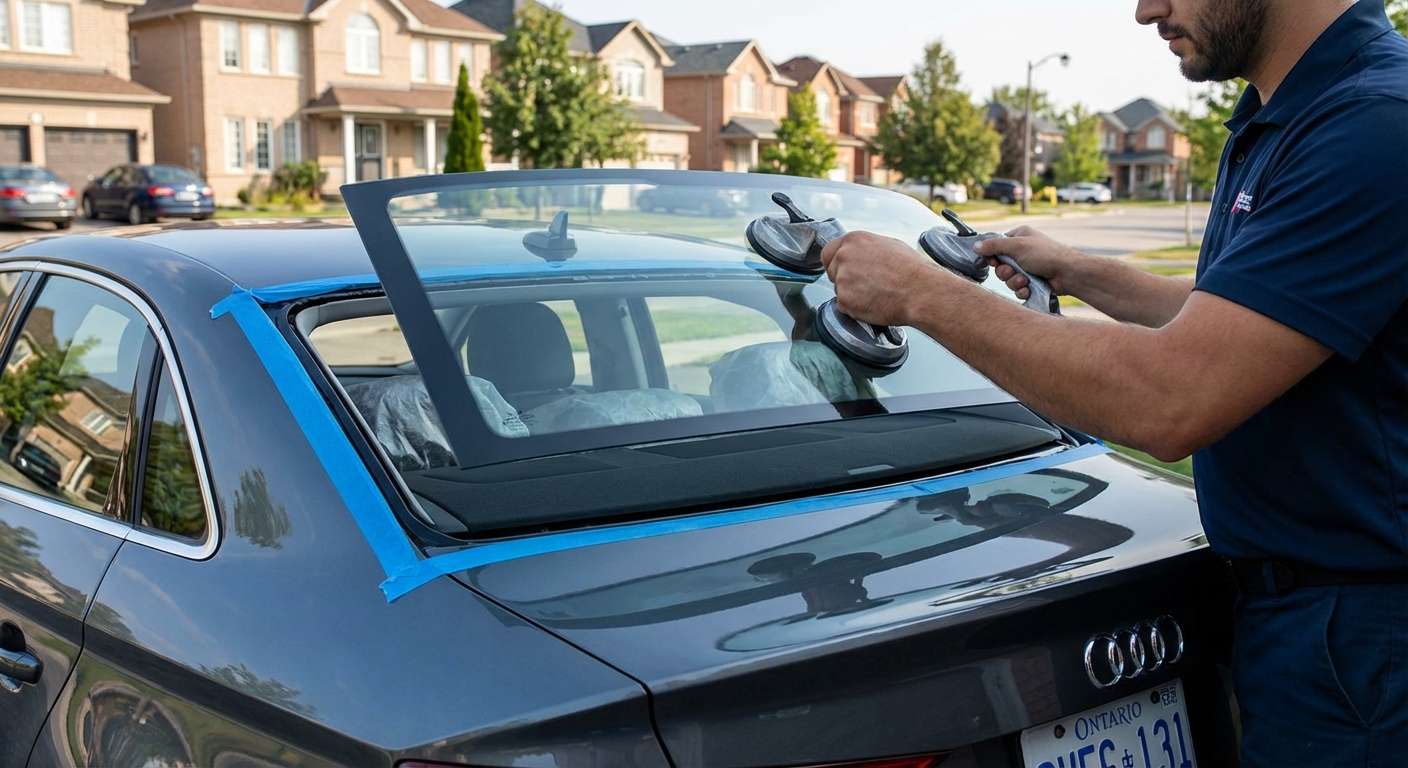
Integrated Antenna Grids and Defroster Networks on the Audi A3
The rear window on this car does far more than seal the cabin against the weather; it serves as the core receiving hub for the onboard telematics. Embedded directly into the single-pane tempered safety glass is a silk-screened conductive grid that divides duties between the heating elements and the radio antenna modules. Depending on whether your car is equipped with standard MMI or upgraded navigation, the glass grid routes signals for AM and FM frequencies, as well as digital radio bands, straight to an antenna amplifier module bolted beneath the interior surround. Because these antenna lines share physical space with the defroster elements, any scratch across the surface can sever your radio reception alongside your rear demisting capability.
A recurring electrical headache on this generation involves the rear defroster switch clicking on and immediately shutting off after about one second. Drivers often suspect a relay failure or a blown fuse under the dashboard, but the onboard control module automatically trips the circuit whenever it detects an open loop caused by severed tracer lines or a detached soldered terminal tab. The harness tabs bonded to the edges of the rear glass are remarkably delicate. I frequently see them snapped clean off the glass during aggressive interior detailing, heavy cargo loading against the rear package shelf, or when old tint film is scraped away, which immediately renders the entire defroster network inoperative.
Distinguishing Sedan and Sportback Rear Glass Variations
Replacing the back glass on an 8V model requires verifying the specific body style immediately, because the sedan, Sportback hatchback, and Cabriolet share zero glass dimensions or mounting provisions. The standard four-door sedan uses OE reference numbers such as 8V5-845-501-E and 8V5-845-501-P-NVB, which are stationary direct-glazed units bordered by a heavy black ceramic enamel frit designed to shield the bonding area from sun degradation. When installing replacements, I source exclusively aftermarket panels manufactured by reputable glassmakers like Pilkington, PGW, FYG, or XYG, ensuring the heating line resistance and green solar-control tint values match original Audi factory performance without buying dealership-boxed parts.
If you drive an A3 Sportback or the plug-in hybrid e-tron variant, the tailgate glass operates under dealer part number 8V4-845-501-NVB and presents a completely different layout. The Sportback unit incorporates a factory-drilled pass-through hole near the bottom edge designed to accommodate the rear wiper motor shaft and its high-pressure wash jet. Trying to source rear glass without accounting for this pre-bored wiper hole will halt a repair on the spot. Unlike the front windshield, this rear pane carries no rain-sensing hardware or optical lane cameras, maintaining a clean glass surface interrupted only by the structural wiper spindle and the perimeter frit.
Cabriolet Bonding Differences and Rear Glass Integrity
The A3 Cabriolet represents an entirely separate design problem because the rear glass does not mount to a rigid steel unibody frame. Operating under base reference 8V7-845-501, the convertible glass is bonded directly into the multi-layer fabric soft-top. These convertible panels frequently suffer from delamination along the lower fabric bead rather than outright rock breakage. Furthermore, because the wiring harness must bend repeatedly as the soft-top folds into the trunk well, defroster failure on the convertible is often tied to fatigue cracks in the hinge wiring loom rather than broken grid traces on the window itself.
Sedan and hatchback models remain spared from folding-roof stress, and this vehicle line holds a solid track record for structural rear glass durability, avoiding the spontaneous shattering defects that prompted safety recalls on platform siblings like the Q3. When stationary rear glass breaks on the sedan or Sportback, it is almost exclusively the result of direct blunt impacts or stress cracks radiating from deep edge chips beneath the rear body pillars.





