Smash-and-Grab Damage and Moulding Variations on the C-Pillar
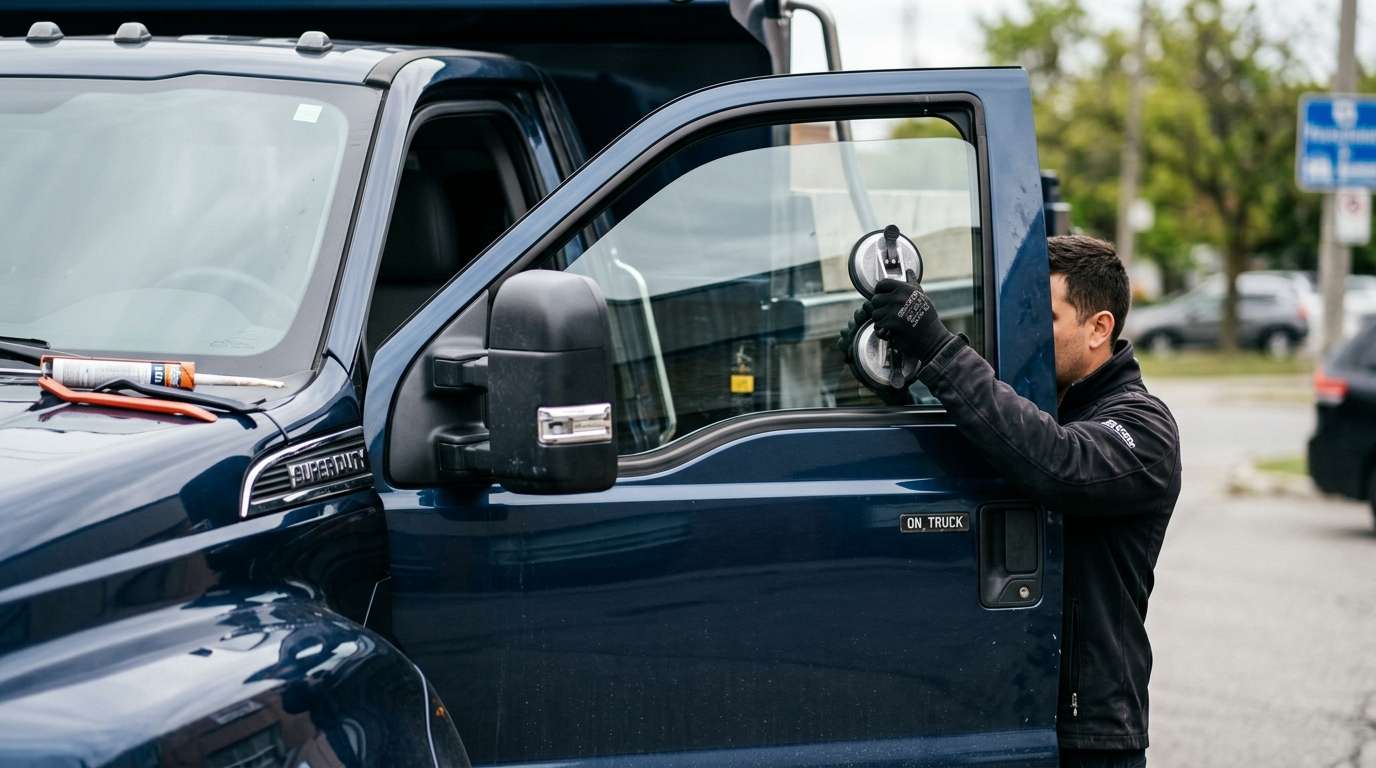
Break-ins account for almost every replacement call I get for the fixed C-pillar glass on this car. Thieves routinely target this small stationary window behind the rear door sash, wrongly assuming it avoids triggering the cabin alarm sensors or that it provides an easy reach to fold down the rear seatback. Because the tempered green safety glass shatters instantly into blunt pebbles, the damage rarely stops at the glass itself: the force often dents or bends the exterior perimeter trim bonded directly to the perimeter.
Getting the correct replacement panel requires matching your exact trim line because the reveal trim is pre-encapsulated from the factory as a single bonded unit. Base and Technology package cars use a bright chrome trim surround (corresponding to dealer parts 73500-TGV-A01 for the right side and 73550-TGV-A01 for the left). If you drive an A-Spec or a Type S, that reveal moulding is factory gloss black (OEM reference 73500-TGV-A11 for the passenger side, 73550-TGV-A11 for the driver side). Aftermarket units follow these exact trim finishes, so identifying whether your window frame trim is chrome or gloss dark metal is essential before ordering the glass.
Interior C-Pillar Clears and Critical Single-Use Moulding Dams
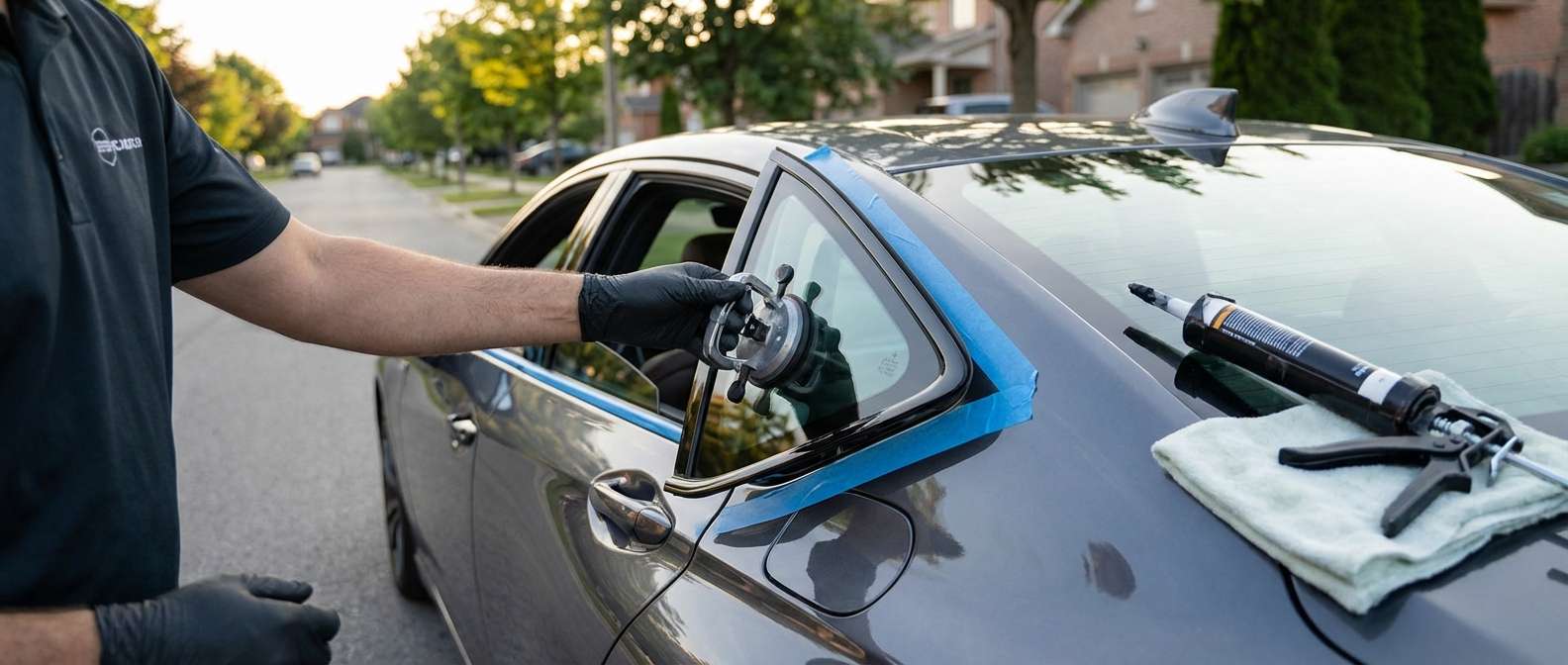
Replacing this window requires taking down the interior C-pillar garnish trim and disengaging the rear parcel shelf edges so there is complete access to the inner quarter panel flange. Unlike quarter glass units on older sedans, this glass does not carry antenna grids, defroster lines, or acoustic camera brackets. However, its position tightly flush against the rear door frame means alignment is unforgiving.
A crucial factor on this vehicle is the forward edge weatherstrip. The rubber moulding dam (factory part numbers 73810-TGV-A01 for the right side and 73860-TGV-A01 for the left) runs along the front edge where the quarter window meets the rear door frame. This dam deforms permanently once the original panel is separated and cannot be reused; a fresh front dam must accompany the replacement glass to ensure the boundary line seals tight against cabin drafts. I back every installation on your TLX with a lifetime guarantee on my workmanship alongside a one-year warranty covering the replacement glass itself. Rear dam rubber 73525-SYY-000 must also be seated properly to maintain factory height alignment with the exterior rear fender.
Distinguishing Glass Seal Leaks from Door Sash Wind Noise
Owners who experience an air whistle near the C-pillar often suspect the quarter glass seal has separated, but factory recalls or structural bonding issues do not exist for this model's quarter aperture. In almost every case, excessive rush of air at highway speeds originates from the adjacent rear door weatherstripping settling out of alignment rather than the urethane bead holding the stationary window. When the quarter glass has been broken and cleared out, setting the correct depth relative to the door sash is what guarantees the wind path remains silent.
Can the chrome or gloss black trim be transferred from my old window to the new one?
No. The outer reveal moulding is factory-encapsulated and vulcanized straight onto the glass edge. If a thief pry-bars the window or breaks the glass, the trim is ruined alongside it. The replacement aftermarket assembly arrives with the matching gloss black or bright chrome trim already attached to the glass perimeter.
Does the quarter glass contain the car's radio or keyless entry antenna?
No. The stationary side glass is purely standard tempered solar-green glass with no embedded electrical traces, AM/FM antenna leads, or defroster filaments. All antenna hardware on this vehicle is housed elsewhere, so there are no wiring harnesses to disconnect behind the C-pillar garnish.
Why does my quote include new front-edge rubber seals?
The forward rubber seal running down the leading edge of the quarter glass serves as the barrier against the rear door opening. Because this seal compresses and tears away during removal of the original frame, using a new seal is mandatory to prevent water ingress and wind noise.