Verifying the Antenna and Defroster Grid on NAGS Part FB21058
Before unboxing a replacement rear window for this vehicle, I immediately examine the embedded electrical lines laid out on the tempered pane. Under NAGS benchmark FB21058, also referenced under Acura part number 73211-S3V-A00, this rear glass serves a dual electrical purpose that must be matched accurately across both the Base and Touring trims. Unlike some contemporary sport utilities that place the radio mast on the roof or rear quarter panel, this liftgate glass incorporates an upper printed radio diversity antenna grid directly above the horizontal defroster traces. I take a multimeter to both sets of solder pads on the dry glass before it ever gets set into the tailgate frame, testing continuity through each line. Because scratches on the interior ceramic paint will completely open the electrical loop, confirming unbroken trace continuity on the brand-new glass prevents hunting down phantom AM and FM reception problems or cold rear defogger dead spots once the tailgate interior is back together.
I also inspect the perimeter alignment of the factory dark privacy tint and the upper edge profile where it meets the high-mount third brake light housing at the top tailgate header. Every replacement I supply is strictly high-grade aftermarket glass sourced from trusted manufacturers like PGW, FYG, XYG, and Pilkington, so I make sure the dark solar-control pigmentation matches the factory-tinted rear quarter glass and that the factory reveal moulding sits true around the perimeter. Many owners wonder if the tailgate glass interchanges with the first-generation Honda Pilot from the same era; it does not, as the contour and upper glass geometry of the MDX liftgate are distinct despite the shared vehicle architecture.
Liftgate Trim Clearance and Wiper Alignment Checks
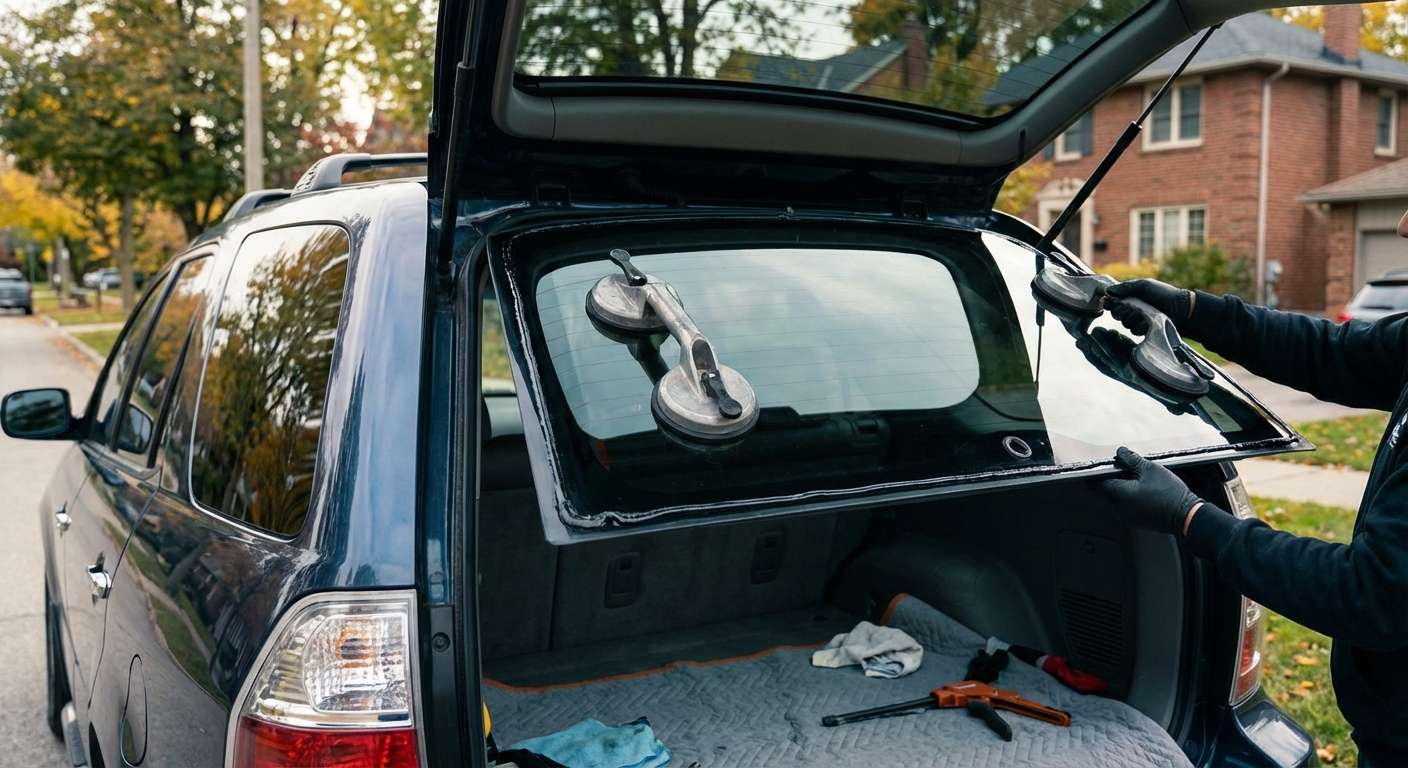
Checking the physical clearance points on the tailgate shell requires paying close attention to how the surrounding components interact with the glass edge. The rear wiper assembly on this liftgate is body-mounted directly into the lower sheet metal rather than passing through a drilled hole in the glass itself. When seating the replacement glass, I verify that the lower perimeter leaves uniform space above the wiper pivot base and that the upper edge tucks evenly beneath the center high-mount stop lamp moulding. A misaligned glass sitting too low can crowd the wiper arm hub, while glass placed too high will bind against the plastic trim surrounding the upper brake lamp.
Inside the cabin, the upper liftgate wiring harness pass-through requires a close post-fit examination. Water intrusion and wire fatigue over decades often affect the rubber accordion boot feeding the hatch, which can starve the glass defroster tabs of power or introduce grounding faults to the diversity antenna amplifier. Once the glass is stationary and the interior liftgate trim panels are reinstalled around the perimeter, I power on the vehicle accessories to confirm clear radio reception without static interference when the defroster relay triggers. Ensuring the defroster terminals sit firmly against the internal tabs without strain from the plastic interior trim prevents the solder joints from popping free the first time the liftgate is closed shut.